ADULT HEALTH CARE SERVICES PROVIDER IN WISCONSIN
By Fatumata Kaba · 2026-04-14 · 5 min read
PROMOTING WELLNESS, FUNCTIONAL INDEPENDENCE, AND COMMUNITY INTEGRATION FOR ADULTS WITH CHRONIC CONDITIONS OR DISABILITIES
Adult Health Care Services in Wisconsin provide critical support for individuals managing chronic illnesses, aging-related conditions, or permanent disabilities. These programs are designed to enhance physical, emotional, and cognitive well-being while fostering community integration and reducing the necessity for higher levels of institutional care. Through Wisconsin’s Medicaid Home and Community-Based Services (HCBS) waivers, such as IRIS and Family Care, providers deliver tailored services that align with person-centered planning requirements to ensure participants reach their functional goals.
Understanding the Governing Structure of Wisconsin HCBS Programs
The delivery of Adult Health Care Services in Wisconsin operates under a highly regulated framework established by the Wisconsin Department of Health Services (DHS). The DHS sets the overarching policy, defines eligibility criteria, and mandates the clinical standards required for service delivery. As a provider, navigating this hierarchy is essential for compliance and operational success. ForwardHealth serves as the administrative backbone, handling Medicaid provider enrollment, service authorization, and the complex reimbursement processes required for claims submission.
Operational oversight is further divided by the specific waiver model. For IRIS participants, IRIS Consultant Agencies provide guidance, while for Family Care participants, Managed Care Organizations (MCOs) act as the primary point of contact for service approvals. These entities are responsible for integrating your health care services into the individual’s Service Plan or Individualized Service Plan (ISP). Monitoring outcomes and maintaining constant communication with these entities is a core requirement for any agency operating in this sector.
Core Service Components and Program Delivery
Adult Health Care Services consist of structured, health-related interventions intended to stabilize or improve a participant's functional status. These services are not one-size-fits-all; they are specifically designed to reduce reliance on institutionalized care by teaching self-management and providing the tools necessary for independent living. Whether delivered in an adult day center, a communal setting, or directly within the participant’s home, the focus remains on measurable improvement in health and independence.
Providers often deliver a blend of the following supports, which must be clearly defined within the participant’s care plan:
- Health education and specialized self-management training
- Nutritional guidance and structured meal planning
- Physical activity coaching and mobility maintenance
- Medication self-monitoring and chronic disease management support
- Cognitive stimulation activities to maintain mental acuity
- Basic personal care, specifically when integrated into a structured program setting
- Mental wellness support and the development of coping strategies
- Community resource navigation and formal service referrals
The Path to Provider Enrollment and Compliance
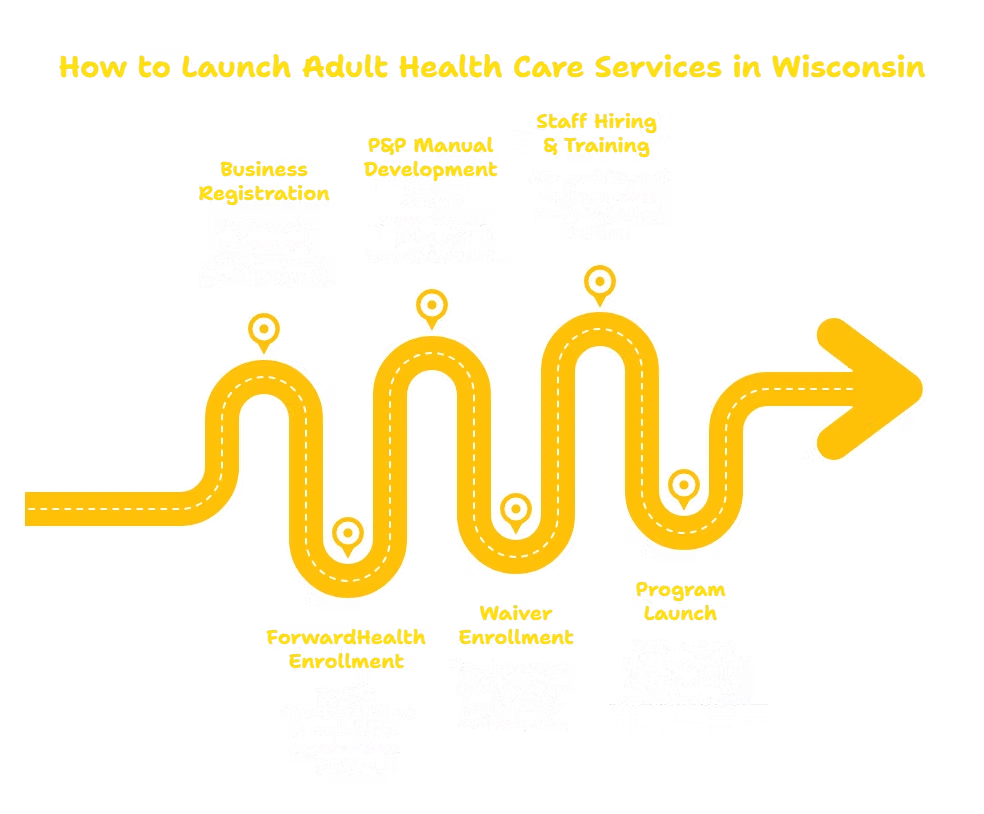
Establishing an agency to provide Adult Health Care Services requires a rigorous, multi-step registration process. Before any services can be billed, the agency must be recognized as a formal business entity by the Wisconsin Department of Financial Institutions (DFI). Following business registration, an agency must secure a Federal Employer Identification Number (EIN) and a Type 2 National Provider Identifier (NPI), which are prerequisites for interacting with federal and state health systems.
Once registered, the provider must undergo the ForwardHealth enrollment process to be recognized as a Medicaid community-based services provider. This involves submitting a comprehensive Policy and Procedure (P&P) Manual, a detailed staffing plan, and proof of appropriate insurance coverage. Simultaneously, the provider must apply to be included in the provider networks of regional MCOs or work with IRIS Fiscal Employer Agents. Compliance is not a one-time event; it requires the ongoing maintenance of staff credentialing logs, background check clearances, and documented adherence to HIPAA standards.
Documentation and Operational Standards
Comprehensive documentation is the primary evidence of service delivery and regulatory compliance. Every interaction, progress note, and assessment must align with the participant’s ISP. Providers are responsible for maintaining organized records that demonstrate the efficacy of the services rendered. A robust P&P manual serves as the foundation for this, outlining daily activity plans, incident reporting protocols, and emergency response procedures that staff are trained to follow in the event of a medical or safety-related crisis.
Operational integrity relies on the following documentation practices:
- Maintenance of participant assessments that map directly to ISP goals
- Detailed progress notes and charting templates that show service outcomes
- Verification of staff training, including CPR, First Aid, and infection control
- Established medication administration protocols (if applicable to the service model)
- Strict adherence to HIPAA and participant confidentiality protocols
- Systematic tracking of daily activities and participant engagement levels
Staffing and Clinical Oversight Requirements
The quality of care provided is directly linked to the qualifications and training of the staff. Personnel delivering Adult Health Care Services are expected to have a background in health, human services, or community-based care. Beyond the initial hiring requirements, which include mandatory background checks, all staff must undergo ongoing professional development to stay current on best practices in disability and aging support. Providing consistent, high-quality care requires a structured onboarding process and regular supervision.
Depending on the scope of the program, clinical oversight may be required. For models that include clinical health assessments, medication administration, or skilled nursing tasks, the presence of a Wisconsin-licensed Registered Nurse (RN) or Licensed Practical Nurse (LPN) is mandatory. Even in non-medical models, having a nurse consultant available to review health documentation and advise on health-related programming can significantly enhance the standard of care and ensure regulatory requirements are met.
Frequently Asked Questions
What is the typical timeline for launching an Adult Health Care program?
The timeline generally spans several months. The initial phase involving business formation and manual development typically takes 3–4 weeks. Hiring and compliance preparation follows for 30–60 days, while the actual waiver enrollment process with MCOs or IRIS agents takes 2–3 months. Program launch occurs only after these approvals are secured and individual participant authorizations are in place.
Is licensure required to provide these services?
While the HCBS waiver programs require specific provider enrollment, licensure may be an additional requirement depending on the service environment. If you are operating an Adult Day Health Center or providing services that overlap with licensed home health or personal care agencies, you must satisfy state licensure criteria in addition to Medicaid provider requirements.
How are Adult Health Care services funded?
These services are funded through specific Medicaid HCBS waivers, including IRIS, Family Care, the Community Options Program (COP), and the Program of All-Inclusive Care for the Elderly (PACE). Reimbursement is contingent upon the services being authorized within the participant’s specific care plan and provided by a state-enrolled, compliant agency.
Key Takeaway: Establishing an Adult Health Care Services agency in Wisconsin requires a disciplined approach to both clinical documentation and administrative compliance. By ensuring that all programming is person-centered and aligns strictly with the regulatory standards of the Wisconsin Department of Health Services and the specific requirements of MCOs and IRIS programs, providers can create sustainable, high-impact services for the vulnerable populations they serve.
Last verified: October 2023. This content is for informational purposes only and does not constitute legal or professional advice. Requirements for Medicaid provider enrollment are subject to change. Always refer to the official ForwardHealth and Wisconsin Department of Health Services websites for the most current regulatory guidance and policy updates.