ADULT HEALTH CARE SERVICES PROVIDER IN VIRGINIA
By Fatumata Kaba · 2026-04-08 · 5 min read
Adult Health Care Services in Virginia provide essential, clinic-based medical and therapeutic support to adults living with disabilities, chronic health conditions, or behavioral health challenges. These community-based programs focus on preventative care, consistent health monitoring, and functional maintenance, ensuring that participants can remain in their homes while receiving the clinical oversight necessary to manage complex health needs.
Understanding the Regulatory Landscape for Virginia Adult Health Care
The delivery of Adult Health Care Services in Virginia is governed by a multi-layered regulatory framework designed to ensure participant safety and the quality of clinical outcomes. Providers must operate in alignment with the Virginia Department of Medical Assistance Services (DMAS), which oversees Medicaid waiver programs, provider enrollment, and billing integrity. Depending on the scope of clinical services offered, providers may also need licensure through the Virginia Department of Health (VDH) or the Virginia Department of Social Services (VDSS).
In addition to state-level oversight, service delivery is coordinated through local Community Services Boards (CSBs) for individuals under the Community Living (CL) and Family and Individual Supports (FIS) Waivers. For participants enrolled in the Commonwealth Coordinated Care Plus (CCC Plus) Waiver, Managed Care Organizations (MCOs) provide the primary layer of care coordination and utilization review. Compliance with these governing bodies is mandatory for maintaining provider status and ensuring reimbursement for medically necessary services.
Core Components of Adult Health Care Delivery
Adult Health Care Services are structured to provide more than just supervision; they act as a vital link between primary care and daily community life. By delivering services in a structured facility or community-based setting, providers address the specific health goals outlined in a participant’s Individual Support Plan (ISP). These services are designed to prevent hospitalization and minimize the progression of chronic illness through professional nursing intervention and consistent monitoring.
Core components of these services generally include:
- Routine monitoring of vital signs and proactive symptom management.
- Clinical medication administration, storage, and regular medication reminders.
- Nutrition assessment, meal planning, and management of specialized medical diets.
- Chronic disease education to empower participants and their caregivers.
- Physical therapy (PT), occupational therapy (OT), and cognitive maintenance exercises as authorized.
- Access to medical social services or therapeutic counseling.
- Comprehensive nursing assessments and ongoing care coordination.
- Facilitation of social interaction and wellness-focused activities.
Navigating the Provider Enrollment and Licensing Process
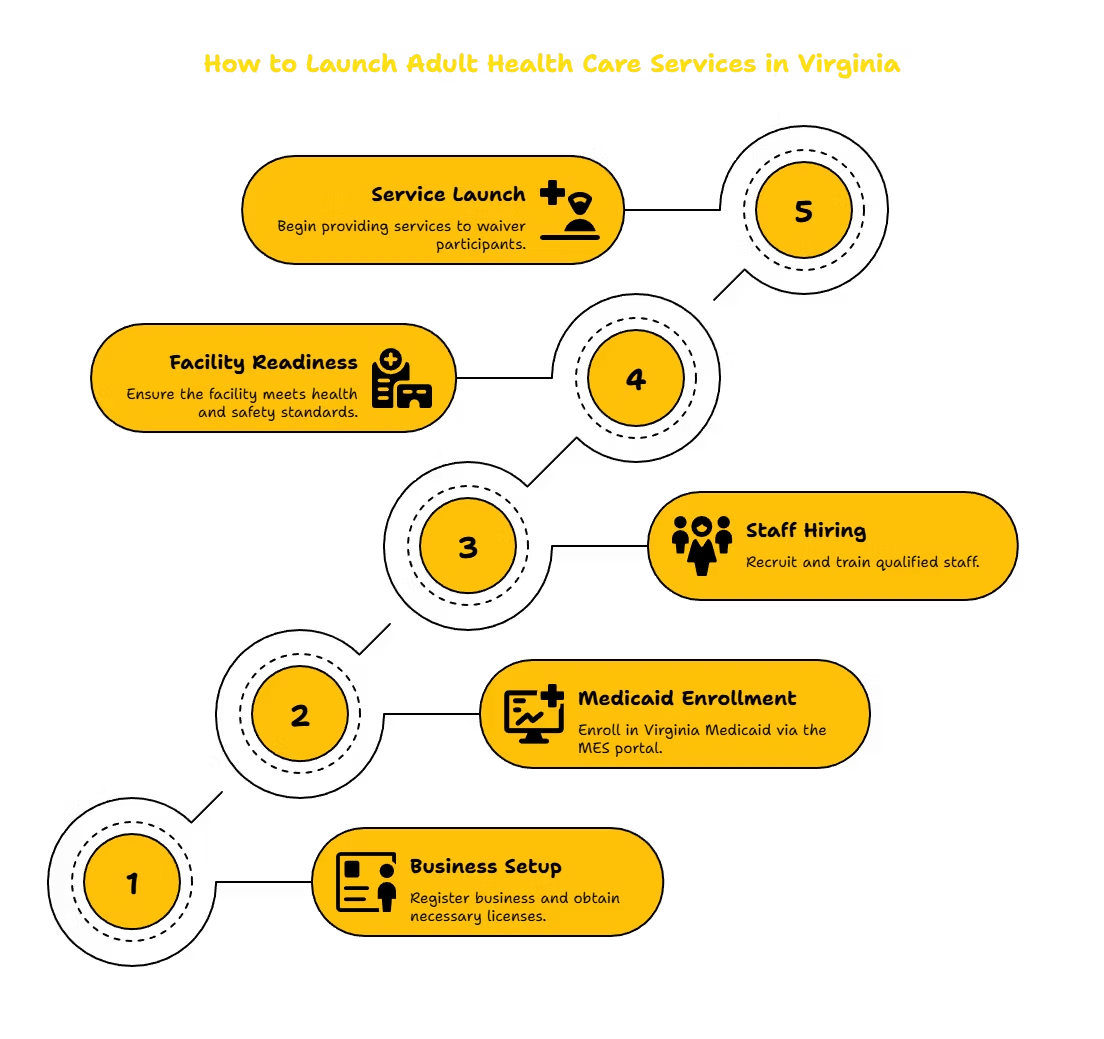
Becoming an approved Medicaid provider for Adult Health Care Services requires a systematic approach to business development and regulatory compliance. The initial phase involves foundational business registration with the Virginia State Corporation Commission (SCC), obtaining an Employer Identification Number (EIN), and securing a Type 2 National Provider Identifier (NPI). These elements are prerequisites for any subsequent administrative application.
Once the legal entity is established, the provider must secure appropriate licensure from the VDH or VDSS based on the specific services offered. This phase involves preparing the facility to meet rigorous health, safety, and accessibility standards required for licensure. Following successful licensing, the provider must enroll in the Virginia Medicaid program via the Medicaid Enterprise System (MES) portal. The final step involves executing participation agreements with regional CSBs or specific MCOs to begin receiving client referrals and ISP-authorized assignments.
Establishing Required Policies and Operational Documentation
A comprehensive Policy and Procedure Manual is the cornerstone of a compliant Adult Health Care program. This document must clearly define the operational standards that govern daily care and administrative oversight. It serves as the reference guide for staff and as primary documentation for auditors from DMAS, VDH, or MCOs. Accuracy and specificity in these documents are critical to maintaining active provider status.
Essential documentation and manual components include:
- Clearly defined admission and discharge criteria aligned with state regulations.
- Detailed nursing protocols and standardized clinical documentation procedures.
- Comprehensive emergency response plans and medication management policies.
- Logs for meal service, nutritional intake, and specialized medical diets.
- Defined staff-to-client ratios to ensure adequate supervision at all times.
- Standardized templates for service notes, ISP goal tracking, and billing.
- Robust HIPAA compliance procedures and participant rights protections.
Staffing Requirements and Clinical Competency
The quality of care in an Adult Health Care setting relies heavily on the credentials and training of the staff. Providers must employ qualified personnel capable of executing the clinical and supportive tasks defined in each participant's ISP. For nursing roles, only individuals with a current Virginia license—such as a Registered Nurse (RN) or Licensed Practical Nurse (LPN)—are authorized to perform health assessments and administer medications.
Direct Support Professionals (DSPs) or health aides must hold at least a high school diploma or GED and receive specialized training in activities of daily living (ADLs), safety protocols, and health support. Regardless of the role, all personnel must undergo comprehensive background checks and maintain active certification in CPR and First Aid. Ongoing professional development is also a regulatory requirement, including mandatory training in infection control, emergency procedures, HIPAA, and person-centered care approaches as required by the Department of Behavioral Health and Developmental Services (DBHDS).
Frequently Asked Questions
What is the primary difference between CL, FIS, and CCC Plus waivers regarding Adult Health Care?
The CL and FIS waivers are typically managed by CSBs and are geared toward individuals with developmental or intellectual disabilities, whereas the CCC Plus waiver is designed for individuals with significant medical needs or chronic illnesses, with oversight provided by MCOs. All three allow for Adult Health Care services, provided the service is deemed medically necessary and aligned with the participant's ISP.
How long should a new provider expect the launch process to take?
Generally, the business setup and licensing preparation phase takes 2–3 months. Medicaid enrollment and contracting usually requires an additional 4–6 weeks, while staff hiring and site readiness can take another 30–60 days. The actual launch of services commences only after formal ISP authorization and receipt of client referrals.
What roles are mandatory in an Adult Health Care facility?
At a minimum, programs must have a qualified licensed nurse (RN or LPN) to handle medical assessments and medication administration, as well as Direct Support Professionals (DSPs) to assist with daily living tasks. Depending on the scope of the facility, a Program Director or Health Services Coordinator is often required for administrative management.
Key Takeaway
Launching an Adult Health Care program in Virginia requires rigorous adherence to state licensing, Medicaid enrollment procedures, and clinical documentation standards. Providers who invest early in building a robust, compliant Policy and Procedure Manual and establish clear pathways for staff training and ISP-aligned service delivery are best positioned to maintain long-term success and ensure high-quality outcomes for waiver participants.
Last verified: October 2023. Disclaimer: This information is for educational purposes only and does not constitute legal or professional consulting advice. Regulations are subject to change; always consult with the Virginia Department of Medical Assistance Services (DMAS) and relevant licensing bodies for the most current requirements.