ADULT HEALTH CARE SERVICES PROVIDER IN OKLAHOMA
By Fatumata Kaba · 2025-09-08 · 5 min read
Becoming an adult health care services provider in Oklahoma is a strategic move to support the state’s aging and disability populations through SoonerCare-funded programs. This endeavor requires navigating a complex regulatory framework involving the Oklahoma Health Care Authority (OHCA), the Oklahoma Department of Human Services (OKDHS), and the Oklahoma State Department of Health (OSDH) to ensure compliance with federal and state HCBS standards.
Providing these essential services enables individuals to maintain their independence, dignity, and health within the comfort of their own homes or community-based settings. For prospective agency founders, success depends on a deep understanding of Medicaid waiver requirements, clinical supervision standards, and the rigorous documentation protocols necessary for operating a high-quality health care enterprise in Oklahoma.
What Are the Governing Agencies for Oklahoma HCBS Providers?
Operating a health care agency in Oklahoma requires coordination with several key state and federal entities. The Oklahoma Health Care Authority (OHCA) serves as the primary governing body, administering SoonerCare (Oklahoma Medicaid) and managing the provider enrollment process. OHCA is responsible for the final reimbursement of all authorized adult health care services, making their portal the central hub for financial and administrative operations.
Complementing OHCA’s role, the Oklahoma Department of Human Services (OKDHS) oversees Aging Services and Developmental Disabilities Services (DDS). These departments are instrumental in coordinating and authorizing services for participants enrolled in specific Home and Community-Based Services (HCBS) waivers. Meanwhile, the Oklahoma State Department of Health (OSDH) provides the necessary health-related licenses for in-home care agencies and specialized health professionals. At the federal level, the Centers for Medicare & Medicaid Services (CMS) ensures that Oklahoma’s programs remain in alignment with national Medicaid and HCBS mandates.
What Scope of Services Can an Oklahoma Provider Deliver?
Providers in the HCBS space offer a continuum of care that addresses both skilled medical needs and daily living support. These services can be delivered directly in the participant’s home or, in specific cases, within licensed adult day health settings. The core of these services is to facilitate a transition from institutionalized care to community-based independence.
- Skilled Nursing Services: Clinical support including medication administration, comprehensive wound care, and the monitoring of complex chronic conditions.
- Personal Care Services: Hands-on assistance with essential activities of daily living (ADLs), such as bathing, grooming, dressing, toileting, and safe transfers.
- Health Monitoring: Regular assessment of vital signs, symptom recognition, and proactive measures to ensure medication compliance and prevent health deterioration.
- Therapeutic Support Services: Specialized care such as physical, occupational, or speech therapy, provided by properly licensed and credentialed professionals.
- Nutrition Support: Development of meal plans, dietary assistance, and feeding support tailored to the participant’s specific health requirements.
- Adult Day Health Care: Daytime supervision, nutritional support, and regular health checks in a community-based setting.
- Care Coordination & Documentation: The foundation of all services, involving the creation of individualized plans of care, maintenance of shift notes, and accurate Medicaid billing records.
What Are the Licensing and Provider Approval Prerequisites?
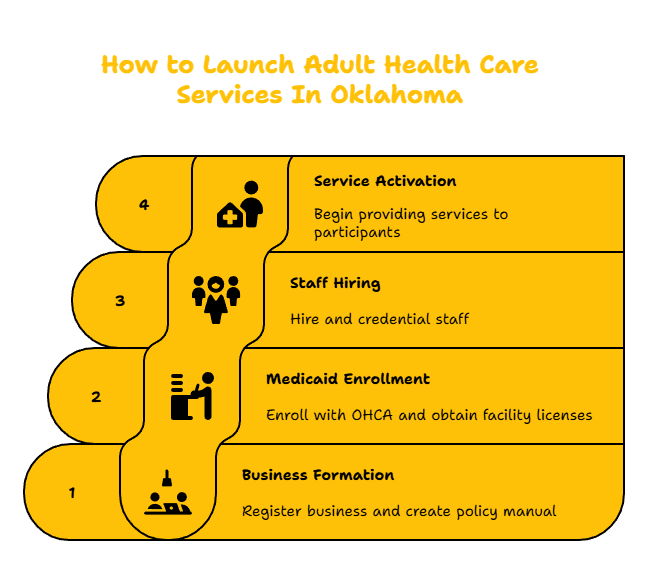
Establishing an agency requires a structured approach to legal and operational readiness. Before an agency can accept its first referral, it must be legally recognized by the state. This starts with registering the business entity with the Oklahoma Secretary of State and obtaining an Employer Identification Number (EIN) from the IRS. Furthermore, obtaining a Type 2 National Provider Identifier (NPI) is essential for Medicaid billing purposes.
Once the legal foundation is set, the agency must seek Medicaid enrollment through the OHCA provider portal and secure any applicable facility licenses from the OSDH. This process is incomplete without comprehensive insurance coverage, including general liability, workers’ compensation, and professional malpractice insurance if skilled nursing staff are employed. Developing a detailed Adult Health Care Services Policy & Procedure Manual is the final, crucial step, as it serves as the blueprint for operational compliance and clinical oversight.
How Do You Manage Staffing and Training Requirements?
High-quality patient care is directly tied to the competency and qualifications of the staff. An agency must employ a Registered Nurse (RN) as a clinical supervisor to oversee care plans, direct medication management, and conduct regular staff training. Alongside nursing staff, the agency relies on Certified Home Health Aides and Personal Care Aides who must hold OSDH certification, pass rigorous background checks, and maintain current CPR and First Aid credentials.
Regardless of the role, every team member must undergo standardized training to ensure safety and compliance. This includes mandatory HIPAA training, education on abuse prevention, participant rights, and infection control protocols. Annual skills assessments are not merely a suggestion; they are a regulatory expectation. By maintaining a robust staff development program, agencies ensure that their employees are prepared to handle the diverse clinical needs of the Oklahoma waiver population.
Which Medicaid Waiver Programs Should Providers Understand?
Understanding the specific waiver programs is essential for marketing services and determining eligibility for potential participants. The ADvantage Waiver is one of the most prominent, focusing on frail elders and adults with disabilities who need support to remain in their homes. For those with more complex needs, the Medically Fragile Waiver provides an elevated level of skilled nursing and intensive care coordination.
Agencies may also work with participants under the Living Choice Program, which facilitates the transition of individuals from nursing facilities back into the community. Furthermore, providers should be familiar with the broader scope of State Plan SoonerCare services and In-Home Supports for individuals with intellectual and developmental disabilities (IDD). Each program has distinct requirements for service delivery, and providers must tailor their care plans to the specific, authorized goals of each waiver.
Frequently Asked Questions
How long does the provider enrollment process typically take?
The timeline involves several phases, beginning with business formation (1–2 months), followed by Medicaid enrollment and licensing (2–3 months), and staff hiring (30–60 days). The total duration can vary based on agency readiness and the speed of state department reviews.
Is an Adult Health Care Services Policy & Procedure Manual mandatory?
Yes, a comprehensive manual is a foundational requirement. It must cover critical areas including plan of care development, health monitoring protocols, documentation standards, HIPAA compliance, incident tracking, and Medicaid billing templates to ensure consistent quality of care.
What role does the OHCA provider portal play for my agency?
The OHCA provider portal is the primary platform for submitting enrollment applications, managing provider credentials, and submitting claims for reimbursement. It is also a vital resource for staying informed on policy changes and maintaining compliance with state billing requirements.
Key Takeaway: Establishing an adult health care agency in Oklahoma is a highly regulated, rewarding process that centers on rigorous adherence to state agency requirements and the delivery of person-centered care. By focusing on compliant policy development, qualified staffing, and strategic coordination with the OHCA and OSDH, providers can successfully build and sustain a model that promotes dignity and independence for Oklahoma’s most vulnerable populations.
Last verified: May 2024. This information is provided for educational purposes and should not be considered legal or professional licensing advice. Always consult with the Oklahoma Health Care Authority (OHCA), the Oklahoma Department of Human Services (OKDHS), and the Oklahoma State Department of Health (OSDH) for the most current regulations and specific administrative guidance.