ADULT FOSTER CARE SERVICES PROVIDER IN KENTUCKY
By Fatumata Kaba · 2025-07-25 · 5 min read
PROVIDING FAMILY-LIKE LIVING ARRANGEMENTS WITH PERSONALIZED SUPPORT IN A COMMUNITY SETTING
Adult Foster Care (AFC) services in Kentucky represent a vital component of the state’s Home and Community-Based Services (HCBS) framework, offering individuals a path to independence outside of institutional environments. By providing 24-hour supervision and daily support within a licensed, private home, these programs ensure that Medicaid-eligible adults can thrive in a stable, family-like setting that prioritizes their autonomy and integration into the broader community.
What is the Scope of Adult Foster Care in Kentucky?
Adult Foster Care is designed to bridge the gap between independent living and higher-level institutional care. The model centers on a residential arrangement where a certified provider opens their private home to provide compassionate, personalized assistance. This environment is intentionally non-institutional, fostering meaningful relationships and a sense of belonging for the participant while ensuring their health and safety needs are met through rigorous oversight.
The daily operation of an AFC home involves a comprehensive suite of services tailored to the participant’s specific needs as outlined in their Person-Centered Service Plan (PCSP). Providers are responsible for the physical environment and the emotional well-being of the individual. Core services typically include:
- Room and board in a clean, safe, and accessible home.
- Assistance with Activities of Daily Living (ADLs), such as bathing, dressing, toileting, and mobility.
- Meal preparation that meets nutritional requirements and personal preferences.
- Medication reminders or administration, depending on specific training and program regulations.
- Housekeeping and laundry services to maintain a sanitary living space.
- Active support for social engagement and community participation to prevent isolation.
Which Regulatory Agencies Govern Kentucky AFC Programs?
Operating an AFC home in Kentucky requires navigating a multi-layered regulatory environment. The Kentucky Cabinet for Health and Family Services (CHFS) and the Department for Medicaid Services (DMS) serve as the central authorities, managing the financial and policy aspects of Medicaid reimbursement and provider enrollment. Compliance with their directives is essential for maintaining eligibility as a Medicaid provider.
Beyond fiscal administration, the quality of care and physical environment are monitored by the Department for Aging and Independent Living (DAIL). DAIL is responsible for licensing homes and establishing the operational standards that providers must meet. At the federal level, the Centers for Medicare & Medicaid Services (CMS) sets the overarching guidelines to protect participant rights, ensuring that all settings remain community-integrated and person-centered. Furthermore, Managed Care Organizations (MCOs) play a direct role in the day-to-day coordination of care by authorizing service placements and managing the credentialing and billing cycles.
What are the Prerequisites for Provider Certification and Enrollment?
Becoming an approved provider is a structured process that begins with legal and structural preparation. Before a home can accept a participant, the operator must establish the business entity—if applicable—and ensure all administrative foundations are in place. This includes obtaining an IRS EIN and a Type 2 NPI for agency-based operations, alongside establishing comprehensive insurance coverage, including both liability and property insurance.
Safety is the primary focus of the initial approval phases. Prospective providers must ensure their residence meets all health and fire safety standards, followed by a formal inspection process. Additionally, the administrative burden includes rigorous background checks for all individuals over the age of 18 living within the household, as well as the creation of a formal Policy & Procedure Manual. This document must clearly outline emergency protocols, HIPAA compliance strategies, and internal grievance procedures to meet state mandates.
How is the Enrollment and Launch Process Structured?
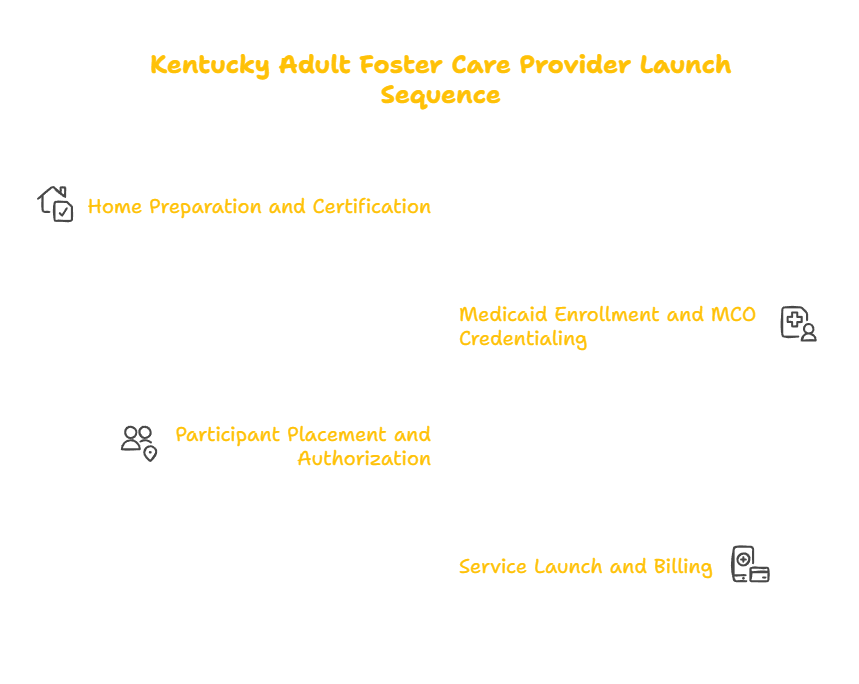
The launch of an AFC program is divided into distinct, sequential phases that prioritize compliance and safety. The first step involves seeking AFC Home Certification through DAIL. This stage requires training, successful completion of home environmental assessments, and demonstrated compliance with state safety criteria. Without this certification, a home cannot be recognized as an approved AFC setting.
Once certified, the provider must transition to the Medicaid enrollment phase. This is completed through the Medicaid Partner Portal Application (MPPA). Following enrollment, the provider must undergo MCO credentialing to become part of the network authorized to deliver waiver services. The final stage is the coordination with case managers to identify suitable participants whose care plans align with the home's capabilities. A successful launch is characterized by meticulous documentation of every stage, from initial certification to the first day of service delivery.
What Documentation and Staffing Standards are Mandatory?
Consistent record-keeping is the backbone of audit readiness. Providers must maintain a robust set of files, including the initial DAIL approval letter, insurance certificates, and a comprehensive Policy & Procedure Manual. Daily logs are equally critical; these should track participant health, medication administration, adherence to the PCSP, and incident reporting. Should an incident occur, the provider must be prepared to follow established state reporting protocols immediately.
Staffing requirements are equally stringent. The primary provider must be at least 21 years old and maintain certifications in CPR and First Aid. Whether the home uses full-time, live-in providers or supplemental relief staff, all personnel must undergo comprehensive training. Mandatory curriculum topics include:
- Abuse, neglect, and exploitation prevention.
- HIPAA-compliant confidentiality and privacy practices.
- Infection control and fire safety protocols.
- Annual continuing education centered on person-centered service delivery principles.
Frequently Asked Questions
Which Medicaid waivers cover Adult Foster Care services in Kentucky?
Adult Foster Care services are primarily reimbursable under the Supports for Community Living (SCL) waiver, the Michelle P. Waiver (MPW), and the Acquired Brain Injury (ABI and ABI-LTC) waivers.
How long does the startup process typically take?
The timeline varies by individual preparedness, but generally, home preparation and certification take 2–3 months, Medicaid enrollment and MCO credentialing take 1–2 months, and compliance setup requires approximately 1 month.
What is the maximum number of participants allowed in an AFC home?
While requirements vary by specific waiver rules, AFC settings in Kentucky are generally limited to small, home-based environments, typically accommodating 1–3 participants to ensure a non-institutional atmosphere.
Waiver Consulting Group’s Start-up Assistance Service
Waiver Consulting Group (WCG) assists stakeholders in navigating the complexities of launching certified Adult Foster Care programs. WCG provides support in home certification preparation, DAIL licensing coordination, and the development of essential Policy & Procedure Manuals. The scope of service extends to MPPA enrollment, MCO credentialing, and the creation of intake packets and documentation tools designed to streamline the transition to operational status. By focusing on regulatory alignment and administrative readiness, WCG helps founders establish sustainable, high-quality care environments for Medicaid waiver participants.
Key takeaway: Establishing an Adult Foster Care provider business in Kentucky requires a rigorous commitment to state certification, Medicaid enrollment via the MPPA, and ongoing adherence to person-centered care standards defined by DAIL and the applicable HCBS waivers.
Last verified: 2024. The information provided in this article is for educational purposes only and does not constitute legal or professional advice. Always consult directly with the Kentucky Cabinet for Health and Family Services (CHFS) or relevant regulatory agencies for the most current program requirements and legal guidelines.