ADULT FAMILY HOME SERVICES PROVIDER IN OREGON
By Fatumata Kaba · 2025-10-06 · 5 min read
PROVIDING PERSONALIZED, ROUND-THE-CLOCK SUPPORT IN A SAFE, FAMILY-LIKE ENVIRONMENT FOR ADULTS WITH DISABILITIES OR AGE-RELATED NEEDS
Adult Family Home (AFH) services in Oregon provide a vital, Medicaid-funded residential alternative to institutional care, offering support in a small-scale, community-based environment. These homes serve adults with intellectual and developmental disabilities (IDD), physical disabilities, or age-related conditions, delivering essential care through certified providers who maintain a nurturing, family-like atmosphere that promotes independence and social inclusion.
Operating under the authorization of Oregon’s Home and Community-Based Services (HCBS) Waivers and the K Plan (1915(k)) through the Oregon Health Plan (OHP), these homes are strictly regulated to ensure resident safety and quality of life. This guide outlines the essential regulatory framework, operational requirements, and procedural steps for individuals and entities seeking to establish and manage an Adult Family Home in Oregon.
Understanding the Regulatory Landscape and Oversight Agencies
The successful operation of an Adult Family Home requires adherence to a multi-tiered regulatory structure involving state and federal oversight. The Oregon Department of Human Services (ODHS)—specifically through Aging and People with Disabilities (APD) and Developmental Disabilities Services (DDS)—serves as the primary authority. These departments are responsible for the certification and ongoing monitoring of homes, often coordinating through local APD offices and Community Developmental Disabilities Programs (CDDPs) to ensure standards are upheld.
Beyond state-level administration, the Oregon Health Authority (OHA) oversees the Oregon Health Plan and the complex Medicaid enrollment systems necessary for reimbursement. On the federal level, the Centers for Medicare & Medicaid Services (CMS) ensures that all residential services provided under the Medicaid umbrella comply with national HCBS requirements. Additionally, any provider entity must comply with legal registration requirements through the Oregon Secretary of State (SOS) to operate as a legitimate business within the state.
Defining the Scope of Residential Care Services
Adult Family Home services are characterized by the provision of 24/7 individualized support within a domestic setting, typically limited to five or fewer residents. This model allows for a high degree of person-centered care that larger institutional facilities cannot replicate. The primary objective is to balance necessary medical and daily living supports with the resident’s right to live in the least restrictive environment possible.
Approved providers are authorized to deliver a comprehensive array of services, which generally include the following:
- Personal Care Support: Assistance with essential daily tasks, including bathing, dressing, grooming, eating, and toileting.
- Medication Management: The structured prompting, administration, and careful documentation of medication regimens.
- Nutrition and Meal Planning: Preparation of meals that accommodate specific dietary needs and nutritional requirements.
- Health Monitoring: Continuous observation of health status, including coordinating with physicians and healthcare providers.
- Community Integration: Supporting residents in accessing community events, religious activities, and local day programs.
- Habilitation: Facilitating the development of independent living skills and supporting behavioral health goals.
- Documentation: Maintaining accurate daily notes, incident logs, Individual Support Plan (ISP) tracking, and Medicaid billing records.
Navigating Licensing and Operational Requirements
Establishing an Adult Family Home requires meeting stringent prerequisites designed to ensure the safety and capability of the provider. Candidates must be at least 21 years old and a resident of Oregon. Before receiving certification, applicants must successfully complete mandatory training programs provided by either ODHS or DDS, depending on the specific demographic of individuals the home intends to serve.
The operational foundation of the home rests on rigorous administrative standards. Applicants must secure general liability and homeowners or renters insurance, pass comprehensive criminal background checks, and undergo a physical home inspection. Furthermore, a provider must develop and maintain a Resident Care and Services Policy & Procedure Manual that aligns with both state and federal mandates. For those pursuing a Host Home model for IDD clients, additional requirements often include specialized behavior support training and close coordination with designated Support Service Brokerages.
The Sequential Process for Provider Enrollment
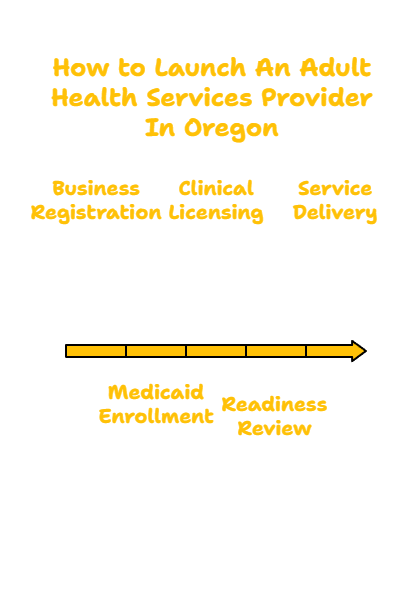
Launching an Adult Family Home is a phased, multi-step endeavor that requires careful attention to detail. The process typically begins by registering the business entity with the Oregon Secretary of State, which is a necessary step for those intending to bill Medicaid as an organization. Following business registration, the prospective provider must submit the official Adult Foster Home or Host Home application to the appropriate ODHS or DDS office.
The enrollment timeline involves several critical phases:
- Phase 1: Preparation and Training (1–2 months): Completion of all pre-service training, CPR/First Aid certification, and policy development.
- Phase 2: Evaluation (1–2 months): Conducting background checks and passing the formal home inspection and environmental safety review.
- Phase 3: Administrative Finalization (1 month): Establishing the Medicaid enrollment infrastructure and finalizing all required documentation sets.
- Phase 4: Service Initiation: Once certification is granted, the provider becomes eligible to receive client referrals from case managers or brokerages.
Staffing, Documentation, and Ongoing Compliance
Staffing requirements are strictly enforced to maintain the integrity of the home. The primary provider must either reside in the home or provide consistent oversight, ensuring that all alternate caregivers meet the same background check and training standards as the primary provider. All staff and household members aged 18 and older must complete training in abuse prevention, HIPAA compliance, resident rights, and emergency preparedness.
Comprehensive documentation is the backbone of Medicaid compliance. A well-prepared home must maintain organized records, including resident care logs, medication administration records, incident reports, fire safety and evacuation plans, and documentation of infection control protocols. This documentation must be readily available for review by state auditors to verify that the care delivered meets the requirements of the specific waiver programs, such as the APD HCBS Waivers, the K Plan (1915(k)), or the IDD Comprehensive and Support Services Waivers.
Frequently Asked Questions
What is the difference between an Adult Foster Home and a Host Home?
While both are residential settings, the terminology often distinguishes the governing program: Adult Foster Homes generally serve adults through APD programs, while Host Homes are frequently associated with IDD supports and coordination through Community Developmental Disabilities Programs (CDDPs) and brokerages.
Are all household members required to undergo background checks?
Yes, all individuals living in the home who are 18 years of age or older must pass criminal background checks and complete specific training regarding the protection of vulnerable adults.
Can I provide services for both aging populations and individuals with IDD?
Licensing is generally specific to the population being served and the department providing oversight. A provider must ensure their certification aligns with the specific needs of the population they are contracted to support through the respective waiver programs.
Key Takeaway: Establishing an Adult Family Home in Oregon is a highly regulated process that demands a commitment to strict documentation, continuous staff training, and ongoing collaboration with state agencies. Success depends on maintaining compliance with both the administrative requirements of ODHS/DDS and the clinical standards set by the Oregon Health Plan and CMS, ensuring that residents receive high-quality, person-centered care.
Last verified: October 2023. Disclaimer: This document is for informational purposes and does not constitute legal or professional advice. Always consult the latest Oregon Department of Human Services (ODHS) and Oregon Health Authority (OHA) guidance to ensure current compliance with state and federal regulations.