ADULT DAY SERVICES PROVIDER IN COLORADO
By Fatumata Kaba · 2025-07-06 · 9 min read
Establishing an Adult Day Services Program in Colorado: A Comprehensive Guide for Providers
Establishing an Adult Day Services program in Colorado offers a vital community-based solution for adults requiring structured support, social engagement, and supervised care during the day, allowing them to remain in their homes. These essential services are primarily reimbursed through Colorado’s Medicaid Home and Community-Based Services (HCBS) Waivers, specifically the Elderly, Blind, and Disabled (EBD) waiver and the Brain Injury (BI) waiver, providing a pathway for eligible individuals to access quality care. This guide outlines the critical steps, regulatory frameworks, and operational considerations for providers looking to launch and operate a successful Adult Day Services program within the state.Understanding the Regulatory Landscape for Adult Day Services in Colorado
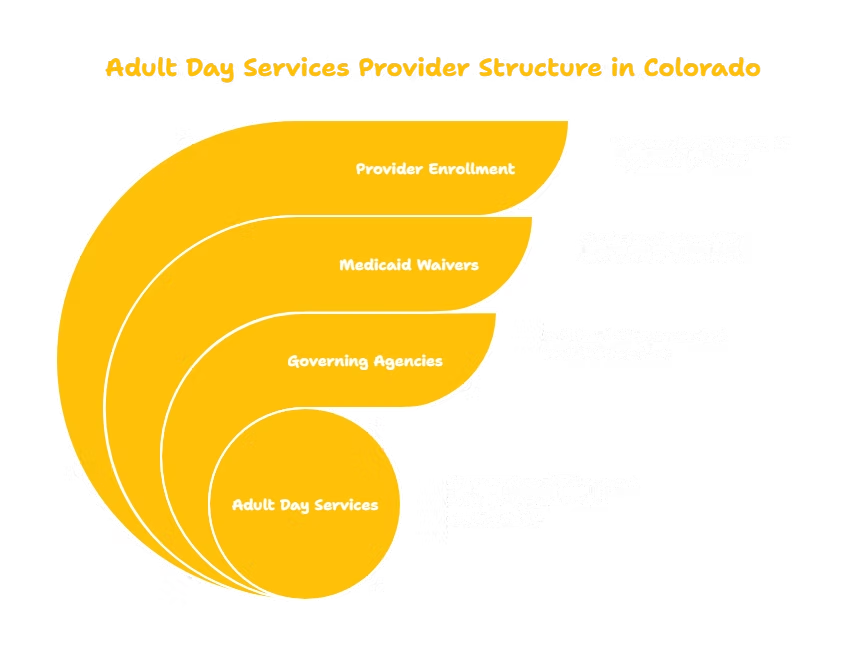
The operation of Adult Day Services in Colorado is overseen by a multi-tiered system of state and federal agencies, each playing a crucial role in ensuring program quality, participant safety, and proper reimbursement. At the state level, the Colorado Department of Health Care Policy and Financing (HCPF) serves as the primary authority responsible for authorizing and reimbursing Adult Day Services through the state’s Medicaid program and its associated HCBS waivers. This includes establishing the service definitions, reimbursement rates, and provider enrollment procedures. Concurrently, the Colorado Department of Public Health and Environment (CDPHE) is tasked with licensing Adult Day Care Facilities, ensuring that all physical locations meet stringent state health and safety regulations. On the federal front, the Centers for Medicare & Medicaid Services (CMS) provides overarching federal oversight, ensuring that all HCBS programs, including Adult Day Services, adhere to federal standards for community integration and participant choice.Key Components of Colorado Adult Day Services Programs
Adult Day Services in Colorado are designed to provide a supportive and engaging environment for individuals who need assistance with daily living or require supervision while their primary caregivers are unavailable. These programs are intentionally structured to foster independence, promote social interaction, and enhance the overall quality of life for participants. Approved providers offer a range of services tailored to meet individual needs, as outlined in each participant's person-centered service plan. These services commonly include assistance with Activities of Daily Living (ADLs) such as bathing, dressing, and eating; medication administration and health monitoring, typically under the supervision of a licensed nurse; and a diverse array of social, recreational, and therapeutic activities designed to stimulate cognitive function and encourage social engagement. Furthermore, providers ensure that participants receive nutritious meals and snacks that accommodate dietary restrictions, provide consistent supervision for safety, and may offer transportation services to and from the center if specified in the service plan. Meticulous documentation of attendance, individual progress, and services rendered is also a fundamental aspect of program operations.Approved Provider Services Often Include:
- Assistance with activities of daily living (ADLs)
- Medication administration and health monitoring (under nursing supervision)
- Social, recreational, and therapeutic activities
- Meals and snacks according to dietary needs
- Supervision and safety monitoring
- Transportation to and from the center (if included in service plan)
- Documentation of attendance and individual progress
Navigating Licensing and Provider Approval Requirements
Launching an Adult Day Services program in Colorado requires adherence to specific business registration, licensing, and Medicaid provider enrollment protocols. The initial step involves formally registering the business entity with the Colorado Secretary of State and obtaining an Employer Identification Number (EIN) from the IRS, along with a National Provider Identifier (NPI) of Type 2 for the organization. Crucially, prospective providers must secure an Adult Day Care Facility license from the Colorado Department of Public Health and Environment (CDPHE), which involves meeting detailed facility and operational standards. Following licensure, the organization must enroll as a Medicaid provider through the Gainwell Technologies Medicaid Provider Portal. Maintaining compliance with federal HCBS settings rules is paramount, emphasizing community integration and participant choice in service delivery. Finally, ensuring the facility meets all accessibility, safety, and appropriate staffing standards is a continuous requirement for ongoing approval and operation.Prerequisites for Provider Approval:
- Register business with the Colorado Secretary of State
- Obtain EIN from the IRS and NPI (Type 2)
- Obtain an Adult Day Care Facility license from the Colorado Department of Public Health and Environment (CDPHE)
- Enroll as a Medicaid provider through the Gainwell Technologies Medicaid Provider Portal
- Maintain compliance with HCBS settings rule, including community integration and participant choice
- Ensure facility meets accessibility, safety, and staffing standards
The Provider Enrollment and Operations Launch Process
The journey to becoming an approved Adult Day Services provider in Colorado involves a sequential enrollment process designed to ensure regulatory compliance and operational readiness. The first critical phase is obtaining the facility license from the CDPHE. This involves submitting comprehensive documentation, including detailed floor plans, proposed safety procedures, staffing plans, and emergency policies, followed by a facility inspection. Once the Adult Day Facility license is secured, the next step is Medicaid enrollment through HCPF, facilitated via the Gainwell Provider Portal. This application requires submitting all necessary business documentation, the CDPHE license, and a detailed description of the proposed HCBS Adult Day Services. Parallel to these steps, establishing a robust referral network is essential. This involves actively coordinating with local Case Management Agencies (CMAs) that serve HCBS waiver participants, building relationships that will lead to client referrals and ensuring smooth transitions for individuals into the program.Key Phases of Provider Enrollment:
- Facility Licensing through CDPHE: Submit floor plan, safety procedures, staffing plans, and emergency policies. Pass inspection and receive Adult Day Facility license.
- Medicaid Enrollment with HCPF: Apply through the Gainwell Provider Portal. Submit business documentation, license, and service description for HCBS Adult Day Services.
- Coordinate with Case Management Agencies (CMAs): Establish a referral network with local CMAs for HCBS waiver participants.
Essential Documentation for Adult Day Services Providers
Comprehensive and meticulously organized documentation is a cornerstone of operating a compliant and efficient Adult Day Services program in Colorado. Providers must maintain a record of all business registrations, including Articles of Incorporation or equivalent business registration documents, the IRS EIN confirmation letter, and NPI confirmation. The active CDPHE Adult Day Facility license and the Colorado Medicaid provider ID are also critical. A robust Policy & Procedure Manual is required, detailing all aspects of program operations. This manual should encompass admission criteria and intake procedures, daily activity schedules, and the development and implementation of individualized service plans. It must also include policies on staff supervision and training logs, medication administration and documentation, participant rights and consent forms, and emergency preparedness and incident reporting procedures. Furthermore, protocols for nutrition, infection control, cleanliness, community integration activities, and transportation logs are vital for demonstrating adherence to health, safety, and program quality standards.Core Documentation Requirements:
- Articles of Incorporation or business registration
- IRS EIN Letter
- NPI confirmation
- CDPHE Adult Day Facility license
- Colorado Medicaid provider ID
- Policy & procedure manual including:
- Admission criteria and intake procedures
- Daily activity schedules and individualized service plans
- Staff supervision and training logs
- Medication administration and documentation policies
- Participant rights and consent forms
- Emergency preparedness and incident reporting procedures
- Nutrition, infection control, and cleanliness protocols
- Community integration activities and transportation logs
Staffing Standards and Training for Adult Day Services
The quality of care provided by an Adult Day Services program is directly linked to the qualifications, training, and dedication of its staff. Key personnel roles include a Program Director, who typically requires experience in health or human services, strong supervisory skills, and a thorough understanding of HCBS rules. Direct care is provided by Activity Coordinators and Direct Care Staff, who must possess at least a high school diploma or GED, have cleared a background check, and hold current CPR/First Aid certification; prior experience with older adults or individuals with disabilities is highly preferred. For programs offering medication administration or health monitoring services, a licensed Registered Nurse (RN) or Licensed Practical Nurse (LPN) holding a valid Colorado license is mandatory. All staff members must undergo comprehensive training covering essential areas such as Adult Day Care operations, person-centered planning, HIPAA compliance, participant rights, medication administration protocols, infection control, emergency response procedures, and abuse prevention. Ongoing professional development and annual performance reviews are crucial for maintaining a high standard of care and ensuring staff remain current with best practices and regulatory requirements.Staffing Roles and Training Needs:
- Program Director: Experience in health or human services, supervisory skills, familiarity with HCBS rules.
- Activity Coordinator / Direct Care Staff: High school diploma or GED, background check and CPR/First Aid certification, experience with older adults or individuals with disabilities preferred.
- Nurse (if providing medication administration or health monitoring): Colorado RN or LPN license.
- Adult day care operations and person-centered planning
- HIPAA and participant rights
- Medication administration and infection control
- Emergency response and abuse prevention
- Ongoing staff development and annual reviews
Reimbursement Through Colorado Medicaid Waivers
Adult Day Services in Colorado are a covered benefit under specific HCBS waivers, ensuring that eligible individuals can access these vital community-based supports. The primary waivers that reimburse for Adult Day Services are the HCBS-EBD (Elderly, Blind, and Disabled) Waiver and the HCBS-BI (Brain Injury) Waiver. In some instances, services may also be covered under other Medicaid-funded long-term care programs, contingent upon an individual's assessed needs and eligibility. Approved providers deliver services that can range from half-day to full-day structured care, focusing on activity-based programming and skill-building opportunities. When authorized in a participant's service plan, nursing support can also be provided. Adherence to waiver guidelines regarding meals, transportation, and documentation is critical for accurate and timely reimbursement.Medicaid Waivers Supporting Adult Day Services:
- HCBS-EBD (Elderly, Blind, and Disabled) Waiver
- HCBS-BI (Brain Injury) Waiver
- Other Medicaid-funded long-term care programs based on assessed need
Projected Timeline for Program Launch
Establishing a licensed and Medicaid-compliant Adult Day Services program in Colorado requires careful planning and execution over several months. The initial phase of Business Formation, including registering the business and obtaining necessary tax identification numbers, can typically be completed within 1–2 weeks. The subsequent phase, Facility Licensing with the CDPHE, is often the most time-intensive, with an estimated timeline of 60–90 days due to the comprehensive review and inspection process. Following the successful acquisition of a facility license, the Medicaid Enrollment process through the Gainwell Portal generally takes between 30–60 days to complete. Finally, achieving Facility Readiness and activating referral streams, which includes setting up operations, hiring and training staff, and establishing relationships with Case Management Agencies, is an ongoing process that commences after initial approvals and continues as the program grows.Typical Launch Timeline:
- Business Formation: 1–2 weeks
- Facility Licensing with CDPHE: 60–90 days
- Medicaid Enrollment (Gainwell Portal): 30–60 days
- Facility Readiness and Referral Activation: Ongoing
Frequently Asked Questions About Adult Day Services in Colorado
What are the primary governing bodies for Adult Day Services in Colorado?
The main state agencies overseeing Adult Day Services are the Colorado Department of Health Care Policy and Financing (HCPF), which handles Medicaid reimbursement and waiver oversight, and the Colorado Department of Public Health and Environment (CDPHE), responsible for licensing Adult Day Care Facilities. Federal oversight is provided by the Centers for Medicare & Medicaid Services (CMS).Which Medicaid waivers typically cover Adult Day Services in Colorado?
Adult Day Services are most commonly reimbursed under the HCBS-EBD (Elderly, Blind, and Disabled) Waiver and the HCBS-BI (Brain Injury) Waiver. Eligibility for these services is determined through a comprehensive needs assessment.What is the typical timeline to become a licensed and enrolled provider?
The entire process, from business formation to Medicaid enrollment, can take approximately 3 to 5 months, with the facility licensing through CDPHE being the most variable component.