ADULT DAY SERVICES PROVIDER IN ALASKA
By Fatumata Kaba · 2025-07-02 · 5 min read
Adult Day Services in Alaska are essential community-based programs designed to provide structured daytime support, socialization, and skill-building for adults with intellectual and developmental disabilities (IDD), physical disabilities, or chronic medical conditions. Operating under the Alaska Department of Health’s Division of Senior and Disabilities Services (SDS), these providers play a critical role in the Home and Community-Based Services (HCBS) ecosystem by offering a safe, supervised environment that fosters independence and improves the overall quality of life for participants outside of their primary residences.
What is the Role of Governing Agencies in Alaska?
The regulatory framework for Adult Day Services in Alaska is defined by a multi-tiered oversight system. The Alaska Department of Health – Division of Senior and Disabilities Services (SDS) serves as the primary regulatory body responsible for authorizing providers, enforcing quality standards, and ensuring strict adherence to state-level compliance mandates. Their role is to verify that programs are not only meeting the individual needs of participants but are also operating within the established scope of the state’s HCBS waiver programs.
At the federal level, the Centers for Medicare & Medicaid Services (CMS) provides overarching guidance to ensure that all state-run programs align with person-centered and community-based care requirements. Supporting these entities, Alaska Medicaid manages the financial and operational aspects of provider enrollment and claims reimbursement. Successful providers must maintain a transparent relationship with these agencies, ensuring that all clinical and administrative practices remain compliant with current state and federal regulations.
How Do Providers Structure Adult Day Services?
Adult Day Services are designed to offer more than just supervision; they serve as hubs for personal development and health maintenance. Programs are typically delivered in dedicated facilities where the environment is tailored to support participants’ specific needs, preferences, and documented service plans. By integrating health monitoring with social engagement, providers create a comprehensive care experience that helps participants remain integrated within their communities.
Approved providers often offer a diverse range of activities and supports, including:
- Supervised daytime care in a facility that meets all SDS-approved safety and accessibility standards.
- Structured recreational, educational, and social activities designed to foster community integration.
- Assistance with Activities of Daily Living (ADLs), such as mobility, toileting, and nutritional support.
- Life skills development, including personal care, community navigation, and money management training.
- Non-clinical health monitoring, including reminders for medications and nutritional intake.
- Coordinated transportation services to and from the center, ensuring consistent attendance.
- Daily documentation practices that track individual goal attainment and service delivery metrics.
What Are the Prerequisites for Licensing and Approval?
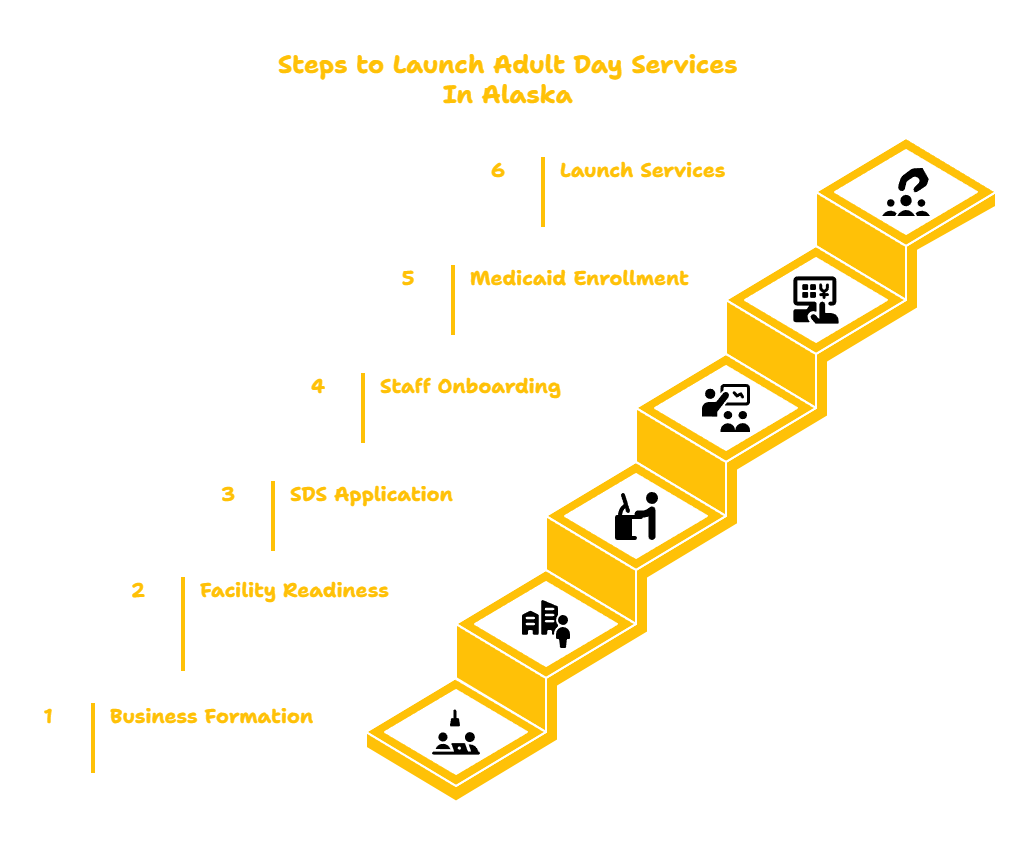
Launching an Adult Day Service provider agency in Alaska requires a rigorous approach to business and facility compliance. Before initiating the formal SDS application process, founders must establish a strong business foundation. This includes registering the business with the Alaska Division of Corporations, Business and Professional Licensing, obtaining a federal Employer Identification Number (EIN), and securing a Type 2 National Provider Identifier (NPI) for claims and billing purposes.
Facility readiness is a critical prerequisite. The chosen site must be fully compliant with local fire, health, and safety codes, and should be ADA-accessible to ensure equal access for all participants. Beyond physical infrastructure, providers must demonstrate operational readiness by developing comprehensive daily schedules, securing adequate liability and workers’ compensation insurance, and hiring staff who possess the necessary training and experience to support adults with disabilities. This preparation phase is the groundwork upon which the entire clinical and regulatory approval process is built.
What Is the Step-by-Step SDS Provider Enrollment Process?
The path to becoming an approved provider begins with expressing interest to the SDS and participating in required informational sessions. Once prepared, the applicant must submit a detailed business and service delivery plan. This document must clearly outline emergency procedures, staff training modules, sample activity schedules, and the specific documentation systems used to track participant progress. The SDS will review these materials for internal consistency and adherence to HCBS program standards.
Following the desk review, the agency may undergo a site readiness inspection. During this visit, inspectors evaluate ADA compliance, emergency preparedness, and the general environment to ensure it supports the safety and well-being of the target population. After successfully passing this inspection, the provider must complete the enrollment process through the Alaska Medicaid Management Information System (MMIS). This final step involves finalizing the Medicaid provider agreement, selecting the appropriate billing codes for the specific waivers being served, and configuring the system for accurate claims processing.
Which Medicaid Waivers Authorize These Services?
Adult Day Services are reimbursed through specific Alaska Medicaid HCBS waiver programs. These include the Alaskans Living Independently (ALI) Waiver, the Adults with Physical and Developmental Disabilities (APDD) Waiver, the Individuals with Intellectual and Developmental Disabilities (IDD) Waiver, and, in specific cases involving transition-age youth, the Children with Complex Medical Conditions (CCMC) Waiver. Each waiver has distinct requirements for participant eligibility and service authorization.
Providers must be proficient in navigating these different waiver structures, as billing practices and service limitations can vary. By maintaining a deep understanding of these programs, providers ensure that they are meeting the exact requirements of each participant’s service plan while maximizing their capacity to deliver meaningful, goal-based programming that aligns with state reimbursement protocols.
Frequently Asked Questions
What staff certifications are required to operate an Adult Day Service?
All staff must possess a high school diploma or GED and meet background check requirements. Additionally, staff must complete SDS-mandated waiver orientation, Adult Day Services training, and maintain current CPR/First Aid certification. Annual training in safety, supervision, and documentation ethics is mandatory for all personnel.
How long does the provider enrollment process typically take?
While timelines vary based on the completeness of submissions, the process generally takes several months. Business formation and facility prep usually take 1–3 weeks, followed by a 60–90 day window for the SDS application and inspection. Medicaid enrollment in the MMIS system typically adds another 45–60 days to the total project timeline.
What documentation must be available for an SDS audit?
Providers must maintain comprehensive records, including a formal Policy and Procedure Manual, participant intake and assessment forms, daily attendance logs, staff training records, emergency evacuation plans, incident reports, and individual goal-tracking documentation. All records must be stored in a manner that ensures client privacy and data integrity.
Key Takeaway
Establishing an Adult Day Services provider agency in Alaska is a complex but vital endeavor that requires meticulous adherence to both state and federal regulations. Success is predicated on thorough upfront preparation, a robust understanding of the specific Medicaid waiver requirements, and an unwavering commitment to the safety and social empowerment of the individuals served. By aligning administrative infrastructure with the rigorous standards set by the Division of Senior and Disabilities Services, providers can create sustainable programs that effectively bridge the gap between home-based care and total community integration.
Last verified: October 2023. This information is provided for educational purposes only and does not constitute legal or professional advice. Always consult with the Alaska Department of Health and the relevant Medicaid authorities for the most current regulatory guidance and requirements.