ADULT DAY HEALTH SERVICES PROVIDER IN WASHINGTON
By Fatumata Kaba · 2026-04-06 · 5 min read
Adult Day Health (ADH) services in Washington offer essential, medically supervised daytime care designed to promote health, engagement, and independence for older adults and individuals living with disabilities. By providing a structured, community-based environment, these programs enable participants to manage chronic health conditions and complex physical or cognitive impairments while continuing to reside in their own homes.
Operating an ADH center in Washington requires navigating a multi-layered regulatory environment involving the Department of Health (DOH), the Department of Social and Health Services (DSHS), and the Health Care Authority (HCA). This guide outlines the clinical, administrative, and licensing requirements necessary to establish and maintain a compliant facility under Washington Apple Health (Medicaid) programs, including COPES, Community First Choice (CFC), and PACE.
What are the Core Components of Washington Adult Day Health Programs?
Adult Day Health centers serve as vital lifelines for individuals who require more than simple social supervision; they require clinical oversight. These programs integrate medical care, rehabilitation, and psychosocial support into a single, cohesive daily experience. For providers, this means the facility must be equipped to handle complex health needs through an interdisciplinary approach that bridges the gap between home life and institutionalized care.
The foundation of every service is the Person-Centered Service Plan (PCSP). This document, developed in partnership with the participant’s case manager and a clinical interdisciplinary team, outlines the specific health and social goals for the individual. Services typically provided include:
- Nursing services and routine medication management.
- Ongoing monitoring of chronic conditions and vital signs.
- Physical, occupational, or speech therapy coordination.
- Nutritional counseling, meal services, and social work support.
- Structured recreational activities designed to improve cognitive and emotional well-being.
How Do Governing Agencies Oversee ADH Licensing and Authorization?
The Washington regulatory framework is divided among three primary agencies, each ensuring that providers meet specific health and quality standards. The Department of Health (DOH) is responsible for the licensing of the physical facility, ensuring that the environment meets health care facility guidelines. Without this foundational license, a provider cannot move forward with Medicaid enrollment.
The Department of Social and Health Services (DSHS)—specifically the Aging and Long-Term Support Administration (ALTSA)—acts as the primary coordinator for the client. They oversee service authorization and ensure that the PCSP aligns with the individual's needs and eligibility. Finally, the Health Care Authority (HCA) manages the financial side of the program, setting the policies for Apple Health funding and overseeing the contracts with Managed Care Organizations (MCOs) that provide these services to eligible clients.
What are the Prerequisites for Licensing and Provider Enrollment?
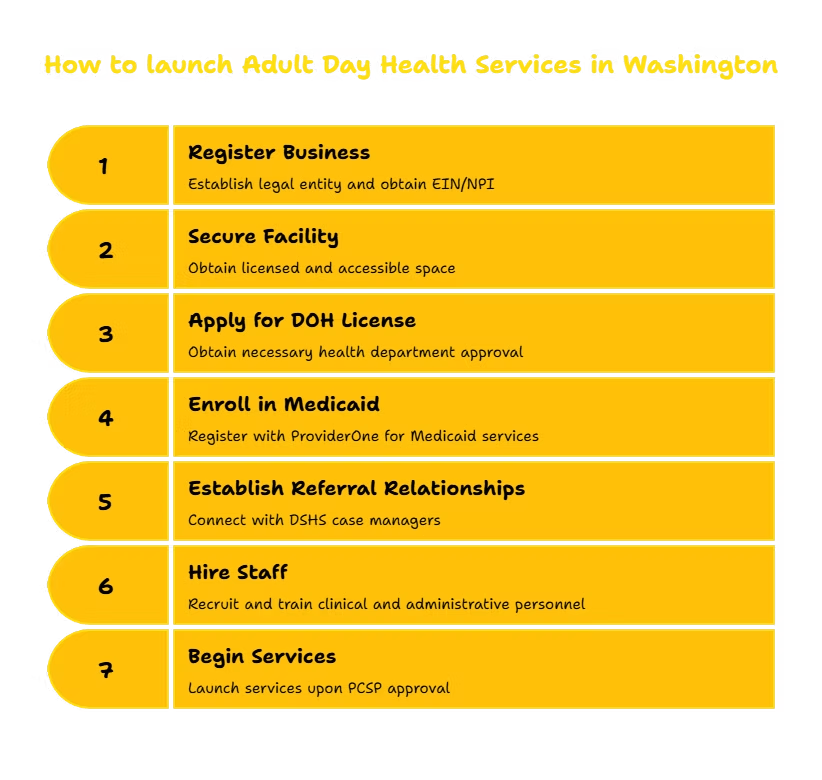
Becoming a recognized provider is a sequential process that begins with legal and structural business formation. Before applying for health-specific licenses, a provider must register the business with the Washington Secretary of State, obtain a federal Employer Identification Number (EIN), and secure a Type 2 National Provider Identifier (NPI). These are the prerequisites that allow the agency to interact with state systems as a recognized business entity.
Once the business is established, the focus shifts to the physical environment and formal enrollment. Providers must:
- Apply for an Adult Day Health Center license through the Washington DOH.
- Ensure the facility meets all ADA accessibility standards and local fire safety inspections.
- Enroll as a Medicaid provider through the ProviderOne portal to facilitate billing and payment.
- Draft a comprehensive Policy & Procedure Manual that covers every aspect of clinical and operational safety.
How Should Providers Structure Their Clinical and Administrative Staffing?
Staffing requirements for an ADH facility are stringent, reflecting the medically intensive nature of the care provided. At the center of the operation is the Registered Nurse (RN), who must hold an active Washington license and maintain direct oversight of clinical care, medication management, and health tracking. This role is non-negotiable, as the "Health" component of ADH relies entirely on the presence of professional medical oversight.
Beyond nursing, the program must employ a team that supports the holistic needs of the participant. This includes a Social Worker or Program Manager who facilitates counseling and discharge planning, and therapists (PT, OT, SLP) who must be licensed in Washington and diligent in documenting therapy progress. Additionally, direct care staff and aides, who provide day-to-day support, must be CPR/First Aid certified and trained in infection control, HIPAA compliance, and elder abuse prevention.
What Documentation Is Essential for Regulatory Compliance?
Successful operation hinges on rigorous documentation. Auditors and case managers require a clear paper trail for every service delivered. This documentation serves both as proof of care and as a clinical record for the participant’s evolving needs. Providers must maintain organized systems that include:
- Medication Administration Records (MARs) and daily health tracking logs.
- Incident reporting systems and emergency evacuation protocols.
- Detailed staff training records, including continuing education and licensure verification.
- Participant intake forms, PCSP tracking updates, and meal service logs.
- Policies on participant rights, infection control, and HIPAA privacy practices.
Frequently Asked Questions
Which Medicaid programs specifically fund Adult Day Health services in Washington?
ADH services are primarily funded through the COPES Waiver for individuals meeting nursing facility level of care, the Community First Choice (CFC) program for those eligible for personal care, and through PACE programs. Some individuals may also access services via Medically Needy Spenddown or State Plan Personal Care depending on their specific eligibility category.
What is the typical timeline for launching an ADH facility?
The timeline typically spans 6 to 9 months. Business setup and facility preparation usually take 1–2 months, followed by 2–4 months for DOH licensing and Medicaid enrollment. Staff hiring and training generally require an additional 4–6 weeks before the facility is ready for participant intake and service launch.
How do I initiate the process of becoming an authorized provider?
You must begin by registering the business, obtaining an EIN/NPI, and securing a facility that meets DOH licensing standards. Once the facility is prepared, you must apply for licensure with the DOH and enroll via the ProviderOne portal. After enrollment is secured, you must establish referral relationships with DSHS case managers to receive participants.
Waiver Consulting Group provides comprehensive assistance to new ADH providers, including facility planning, DOH licensing support, Medicaid ProviderOne enrollment, and the development of customized Policy & Procedure Manuals. By focusing on clinical documentation templates, staff credentialing systems, and interdisciplinary care plan formats, WCG helps providers maintain regulatory excellence from the day they open their doors.
Key takeaway: Success in the Washington Adult Day Health market requires a disciplined adherence to the clinical mandates set by the DOH and the administrative requirements of the ProviderOne Medicaid portal. By prioritizing a well-documented interdisciplinary care model and ensuring all staff are fully credentialed, providers can deliver essential services that meet the high standards expected by DSHS and the individuals they serve.
Last verified: 2024. Disclaimer: This information is for educational purposes only and does not constitute legal or professional advice. Always verify current state regulations and policy updates directly with the Washington Department of Social and Health Services (DSHS) and the Health Care Authority (HCA).