ADULT DAY HEALTH SERVICES PROVIDER IN MISSOURI
By Fatumata Kaba · 2025-08-07 · 5 min read
SUPPORTING HEALTH, WELLNESS, AND SOCIAL ENGAGEMENT FOR ADULTS WITH DISABILITIES AND THE ELDERLY
Adult Day Health Services in Missouri serve as a vital component of the state’s long-term care infrastructure, providing structured medical oversight and social engagement for individuals who need daily care but wish to remain in their own homes. These services are delivered within a community-based setting to adults with disabilities, chronic health conditions, or age-related needs, acting as an essential support pillar for both participants and their primary caregivers.
For entrepreneurs and healthcare organizations, establishing an Adult Day Health program requires a deep understanding of the regulatory environment governed by the Missouri Department of Health and Senior Services (DHSS) and the Missouri Department of Social Services (DSS). By adhering to these strict standards and integrating into the Home and Community-Based Services (HCBS) Waiver models, providers play a crucial role in reducing institutionalization and improving the quality of life for vulnerable populations across Missouri.
What Are the Governing Agencies and Regulatory Frameworks?
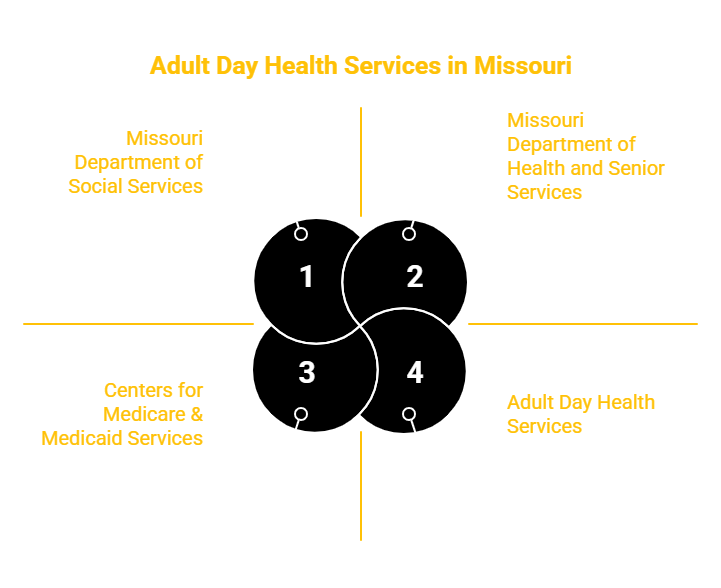
The provision of Adult Day Health Services is strictly regulated to ensure high standards of participant safety and care quality. Providers must operate in compliance with the Missouri Department of Health and Senior Services (DHSS), which acts as the primary regulatory body responsible for administering the HCBS Waiver programs and overseeing the licensing of adult day health facilities. Their role includes conducting surveys, ensuring policy adherence, and safeguarding the rights of program participants.
In addition to DHSS, the Missouri Department of Social Services (DSS) manages the financial and enrollment aspects of the program. DSS is responsible for the oversight of Medicaid provider enrollment, the processing of claims, and the formal authorization of services for eligible participants. At the federal level, the Centers for Medicare & Medicaid Services (CMS) provides overarching guidance and ensures that Missouri’s waiver programs meet all federal requirements for transparency, accessibility, and fiscal compliance.
How Are Adult Day Health Services Structured for Participants?
Adult Day Health Services are designed to be individualized, ensuring that every participant receives care that aligns with their unique medical and social needs. These services are documented through either an Individual Service Plan (ISP) or a Person-Centered Plan (PCP), which dictates the frequency and type of care provided. The goal is to create a structured daytime environment that balances therapeutic medical interventions with necessary social interaction.
A typical program includes a robust offering of services, ranging from clinical monitoring to psychosocial support. Essential service components include:
- Health monitoring, including vitals tracking and professional medication administration.
- Access to physical, occupational, and speech therapy as prescribed.
- Hands-on assistance with activities of daily living (ADLs) such as hygiene, grooming, and mobility.
- Structured social and recreational activities designed to prevent isolation.
- Nutritious, medically appropriate meals and snacks provided throughout the day.
- Caregiver respite, offering primary family caregivers the necessary relief to maintain their own well-being.
What Are the Licensing and Provider Approval Requirements?
The journey to becoming an approved Medicaid provider in Missouri is a multi-step process that begins with formal business and administrative setup. Providers must ensure their organization is legally recognized by registering with the Missouri Secretary of State. Once the business entity is established, the provider must obtain a federal Employer Identification Number (EIN) from the IRS and a Type 2 National Provider Identifier (NPI) to facilitate billing and credentialing.
After these administrative foundations are laid, the prospective provider must satisfy the operational licensing mandates. This includes securing an Adult Day Health License from the Missouri Department of Health and Senior Services and maintaining comprehensive liability insurance. Furthermore, the agency must have detailed clinical staff documentation and robust operational policies ready for review to demonstrate that the facility is prepared to handle the complex medical and personal needs of the HCBS population.
How Does the Medicaid Provider Enrollment Process Work?
The transition from a licensed business to an authorized Medicaid provider follows a structured timeline involving several distinct phases. Initial engagement begins with a pre-application contact with the Missouri Department of Social Services to confirm that the organization meets the specific program requirements. Following this, the applicant must formally submit a complete application packet, which includes business registration, the state-issued license, proof of insurance, and detailed service descriptions.
Once the submission is complete, the state conducts a rigorous verification of the Adult Day Health License. Only after the license is verified and the agency passes all necessary screenings will the Missouri Department of Social Services assign a unique Medicaid provider number. This number is the final authorization required to commence the delivery of billable services to participants enrolled in the Aged and Disabled Waiver (ADW), the Independent Living Waiver, or the Medically Fragile Adult Waiver.
What Documentation and Staffing Standards Must Be Met?
Operational success in an Adult Day Health facility is defined by meticulous documentation and specialized staffing. An agency’s policy and procedure manual must cover all aspects of daily operation, including rigorous client intake and health assessment protocols, daily activity schedules, and established safety and infection control measures. Furthermore, providers must maintain comprehensive records of medical care, daily progress notes, and clear documentation of staff training and supervision logs to remain in constant compliance with state surveyors.
Staffing requirements are equally stringent to ensure high-quality care. Key personnel include a Program Director or Health Services Coordinator, who must possess sufficient experience in healthcare administration or management. Clinical needs are addressed by Registered Nurses (RNs) or Licensed Practical Nurses (LPNs) who hold active state licenses and current CPR/First Aid certifications. Additionally, Activity Coordinators and Direct Support Workers—typically requiring a high school diploma or equivalent and training in social work or recreational therapy—are essential for daily engagement. Ongoing training is mandatory, focusing on infection control, ADL support techniques, and effective communication strategies.
Frequently Asked Questions
What waivers include Adult Day Health Services?
Adult Day Health Services in Missouri are primarily delivered through the Aged and Disabled Waiver (ADW), the Independent Living Waiver, and the Medically Fragile Adult Waiver, providing diverse pathways for accessing these essential community services.
How long does the provider enrollment process typically take?
The timeline for Medicaid provider enrollment generally spans 60–90 days, though this is preceded by business formation (1–2 weeks), facility licensing (2–4 weeks), and staff hiring and training (30–45 days).
What core components must be included in the provider’s policy manual?
Policies must include client intake and assessment procedures, daily schedules for monitoring and activities, infection control and safety protocols, documentation standards for medical care, and clear evidence of staff training and supervision.
Key Takeaway
Launching an Adult Day Health Services program in Missouri is a significant commitment that requires strict adherence to DHSS and DSS regulations. By focusing on compliant documentation, qualified staffing, and efficient Medicaid provider enrollment, providers can build sustainable, high-quality programs that deliver essential support to Missouri’s aging and disabled populations.
Last verified: June 2024. This information is for educational purposes only and does not constitute legal or professional advice. Always consult with the Missouri Department of Health and Senior Services or a qualified consultant to ensure compliance with the most current state and federal regulations.