ADULT DAY HEALTH SERVICES PROVIDER IN ILLINOIS
By Fatumata Kaba · 2025-07-19 · 5 min read
Adult Day Health Services (ADHS) in Illinois serve as a vital link in the state’s Home and Community-Based Services (HCBS) framework, offering structured, medically supervised daytime care for individuals who require health monitoring and assistance but wish to avoid institutionalization. By providing a comprehensive blend of nursing services, therapeutic activities, and social engagement, these programs empower participants to maintain their independence while providing essential respite for family caregivers.
Operating an ADHS provider agency in Illinois requires navigating a complex regulatory landscape overseen by the Illinois Department on Aging (IDoA) and the Department of Healthcare and Family Services (HFS). Success depends on establishing a compliant infrastructure that aligns with federal Medicaid standards and state-specific licensing mandates, ensuring that every service delivered adheres to the participant's individualized Service Plan.
How Does the Regulatory Oversight of ADHS Work in Illinois?
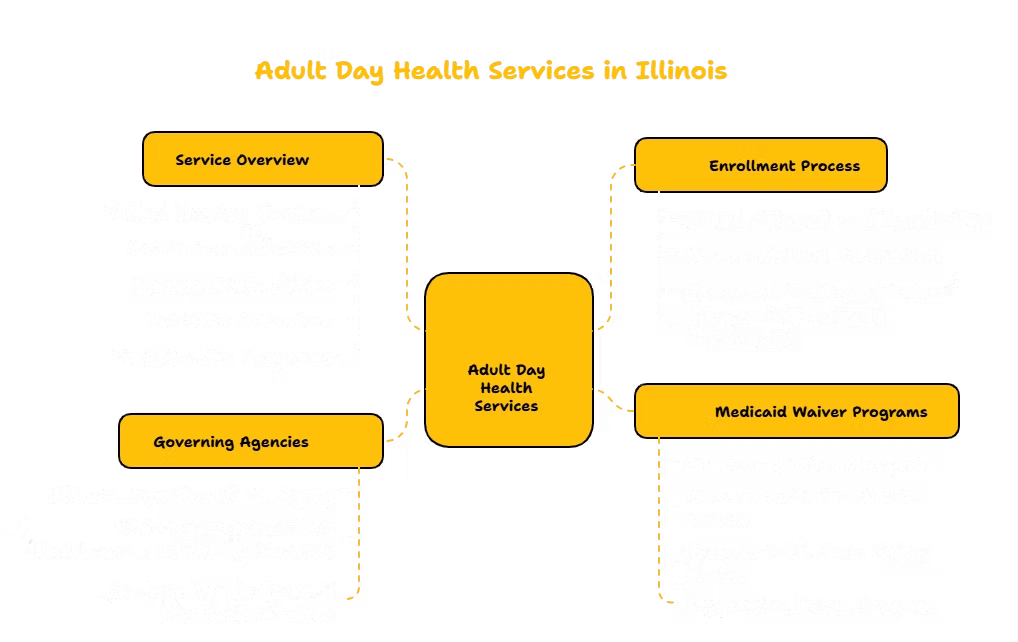
The governance of Adult Day Health Services in Illinois is a multi-tiered process involving state and federal oversight. The Illinois Department on Aging (IDoA) acts as the primary authority for the Community Care Program (CCP), setting the standards for quality assurance and program compliance for older adults. IDoA’s role is critical in ensuring that centers meet the physical and social needs of the aging population within a community-integrated setting.
Simultaneously, the Illinois Department of Healthcare and Family Services (HFS) administers the Medicaid waiver funding that makes these services financially sustainable for providers. HFS manages the enrollment process through the IMPACT system and oversees the complex billing infrastructure. At the federal level, the Centers for Medicare & Medicaid Services (CMS) provides the overarching regulatory framework, ensuring that all state-run, Medicaid-funded programs adhere to strict HCBS quality and safety mandates.
What Scope of Care Must an Approved ADHS Provider Deliver?
Approved ADHS providers are tasked with delivering a balanced regimen of care that addresses the clinical, physical, and emotional needs of the participant. Medically supervised care is at the core of the service model, which includes regular vital signs monitoring, chronic disease management, and professional medication administration by a Registered Nurse. These clinical services ensure that participants remain stable and healthy throughout the day.
Beyond clinical support, the program must offer robust daily living assistance and engagement opportunities. This includes help with activities of daily living (ADLs) such as grooming and mobility, as well as nutritional services that meet specific dietary requirements. To promote holistic health, providers must also implement restorative activities, cognitive exercises, and socialization programs designed to mitigate the isolation often associated with chronic health conditions.
- Skilled nursing services: Medication management, vital signs, and health monitoring.
- ADL support: Assistance with toileting, feeding, grooming, and transfers.
- Restorative therapies: Cognitive and physical exercises supervised by qualified staff.
- Social enrichment: Recreational programs to promote community integration.
- Operational logistics: Coordinated transportation and nutritional support.
What Are the Essential Steps for Licensure and Enrollment?
The transition from a business concept to a certified provider involves a rigid sequence of administrative requirements. Founders must first establish a legal business entity with the Illinois Secretary of State and secure a federal Employer Identification Number (EIN) and a Type 2 National Provider Identifier (NPI). These foundational steps are necessary before applying for IDoA certification or enrolling in the Medicaid program via the HFS IMPACT portal.
Following registration, the facility must undergo a rigorous readiness review. This includes meeting local health and sanitation inspections, ensuring the facility adheres to Americans with Disabilities Act (ADA) accessibility standards, and securing comprehensive professional liability insurance. The state will perform on-site inspections to verify that the physical facility, the proposed staffing ratios, and the internal operational policies satisfy all safety and quality mandates.
What Documentation and Policies Are Required for Compliance?
A successful application and ongoing operational compliance hinge on a comprehensive Policy & Procedure Manual. This document acts as the blueprint for the organization, outlining every facet of the participant experience—from the initial intake assessment to the ongoing management of the individual's Service Plan. The manual must explicitly detail HIPAA compliance, grievance procedures, and participant rights to ensure legal and ethical standards are upheld.
Administrative records must be meticulously maintained for all staff and participants. For staff, this includes evidence of background screenings, licensure verification, and proof of mandatory training in areas such as elder abuse prevention and emergency preparedness. For billing compliance, providers must implement systems that track service delivery in real-time, matching documentation to the specific Medicaid billing codes approved for their waiver program designation.
What Are the Mandatory Staffing Standards?
Illinois requires ADHS providers to employ a multi-disciplinary team capable of managing the diverse needs of the population. The Program Director or Administrator oversees the daily operations and must possess a combination of management experience and a strong background in healthcare or human services. Clinical leadership is provided by a Registered Nurse (RN), who is responsible for the health monitoring and the overall medical integrity of the participant's care plan.
Direct care staff and activity coordinators round out the team. Activity coordinators focus on therapeutic and social engagement, while program aides provide the hands-on assistance required for daily living tasks. All personnel must undergo a background clearance and participate in an initial and ongoing training regimen. This curriculum covers critical topics like dementia care, infection control, and person-centered service delivery to ensure high-quality, dignified care.
Frequently Asked Questions
Which Medicaid waiver programs cover Adult Day Health Services?
ADHS services are available through several Illinois programs, including the Community Care Program (CCP) for individuals aged 60 and older, as well as the Persons with Disabilities (PD) Waiver and the Persons with Brain Injury (BI) Waiver. Certain enhanced day programming may also be covered under the Supportive Living Program (SLP).
How long does the launch process generally take for a new provider?
The timeline varies depending on facility readiness, but generally, the process takes approximately 12 to 18 months. This includes 2–4 months for business formation, 3–6 months for facility and program development, 2–3 months for state certification, and up to 90 days for Medicaid enrollment and billing setup.
Are there specific training requirements for all staff members?
Yes, all staff must complete training in elder abuse prevention and mandatory reporting, HIPAA compliance, emergency preparedness, infection control, and dementia care. These competencies are typically verified through annual assessments to ensure ongoing compliance.
Key Takeaway
Launching an Adult Day Health Services provider in Illinois is a rigorous, highly regulated undertaking that requires strict adherence to IDoA and HFS standards. By focusing on robust policy development, professional staffing, and precise Medicaid billing integration, providers can create sustainable programs that effectively reduce the reliance on institutional care and support the long-term well-being of the state’s most vulnerable populations.
Last verified: October 2023. Disclaimer: This article is for informational purposes only and does not constitute legal or professional consulting advice. Regulatory requirements are subject to change; always verify current statutes and mandates with the Illinois Department on Aging and the Illinois Department of Healthcare and Family Services before initiating your application.