ADULT DAY HEALTH SERVICES PROVIDER IN HAWAII
By Fatumata Kaba · 2025-07-16 · 5 min read
ENHANCING WELL-BEING AND COMMUNITY PARTICIPATION THROUGH DAILY MEDICAL AND SUPPORT SERVICES
Adult Day Health Services (ADHS) in Hawaii serve as a cornerstone of the state's long-term care infrastructure, providing structured, community-based medical and social support for individuals with disabilities, chronic illnesses, or aging-related needs. These programs are essential in supporting participant independence, reducing the risk of premature institutionalization, and ensuring that individuals receive necessary clinical monitoring within a vibrant social environment authorized by Hawaii’s Medicaid Home and Community-Based Services (HCBS) waiver programs and State Plan benefits.
How Does the Regulatory Framework Govern ADHS Providers in Hawaii?
Operating an ADHS program in Hawaii requires navigation through a multi-tiered regulatory environment. Oversight is primarily split between state and federal entities to ensure quality of care and financial accountability. The Hawaii Department of Human Services (DHS) Med-QUEST Division functions as the primary authority for Medicaid provider enrollment, the authorization of services, and the processing of reimbursement claims. Their oversight ensures that services delivered align with the specific requirements of the participant's Individualized Service Plan (ISP).
In parallel, the Hawaii Department of Health (DOH) Office of Health Care Assurance (OHCA) maintains the licensing standards for adult day health centers. This agency is responsible for conducting on-site inspections, ensuring that facilities meet health and safety codes, and confirming that the center's operational practices comply with state regulations. At the federal level, the Centers for Medicare & Medicaid Services (CMS) provides the broader regulatory framework, mandating that all HCBS-funded services adhere to strict community integration and quality assurance standards to maintain federal funding eligibility.
What Scope of Services Must an Approved ADHS Provider Deliver?
To qualify as an approved provider, an organization must offer a comprehensive range of services that address both the medical and psychosocial needs of participants. These services are designed to be individualized, meaning the specific mix of support provided to a participant must be driven directly by their ISP. The goal is to create a holistic environment where clinical health needs are addressed alongside opportunities for social engagement and community connection.
Approved providers are typically expected to integrate the following core components into their daily operations:
- Skilled nursing services, including ongoing health monitoring, medication administration, and specialized wound care.
- Personal care assistance for activities of daily living, such as toileting, eating, and mobility support.
- Access to physical, occupational, and speech therapy, whether provided directly on-site or facilitated through professional referrals.
- Structured social, educational, and recreational programming designed to combat isolation and promote cognitive well-being.
- Nutritionally balanced meals and snacks that accommodate dietary restrictions.
- Transportation services for participants to and from the center, as authorized under their specific waiver program.
What Are the Mandatory Licensing and Enrollment Prerequisites?
The journey to becoming a certified provider begins with establishing the legal and administrative infrastructure of the business. Before an application can be submitted to the state, the organization must be properly registered with the Hawaii Department of Commerce and Consumer Affairs (DCCA). Additionally, providers must secure an Employer Identification Number (EIN) from the IRS and obtain a Type 2 National Provider Identifier (NPI) to be used for all Medicaid billing and administrative purposes.
Beyond legal registration, providers must satisfy strict facility-based requirements. Securing an Adult Day Health Center License through OHCA is a critical milestone that involves rigorous vetting. This process includes proving that the facility complies with building safety codes, accessibility standards under the ADA, and specific staffing ratios. Simultaneously, providers must secure robust insurance coverage, including general liability, professional liability, and workers’ compensation insurance, to protect both the agency and its participants.
What Steps Define the Med-QUEST Provider Enrollment Process?
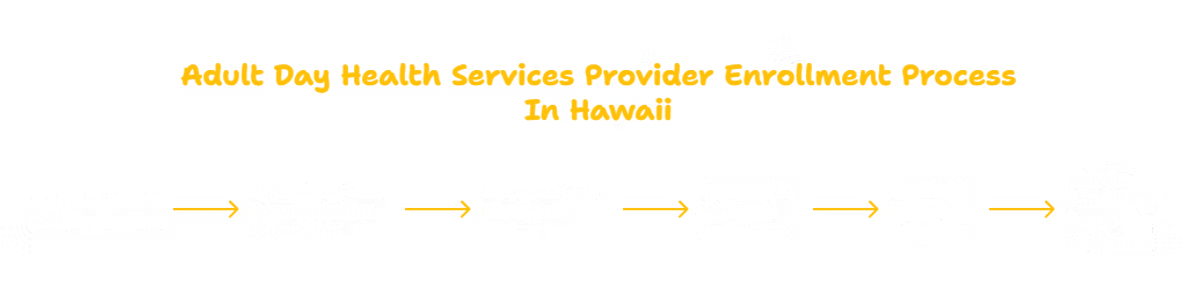
The enrollment process with Med-QUEST is a multi-phase endeavor that requires meticulous attention to detail and thorough documentation. It begins with the initial application for provider enrollment and the concurrent application for facility licensure through OHCA. During this phase, providers must submit a comprehensive packet that includes Articles of Incorporation, proof of EIN and NPI, detailed floor plans, and proposed staffing rosters. This documentation serves as the blueprint for the state to evaluate whether the agency has the operational capacity to provide care.
Following the submission, the process moves into a readiness review. OHCA will conduct an on-site inspection to verify physical compliance, while DHS will evaluate the provider's internal systems, including participant protection protocols, care delivery models, and Medicaid documentation standards. Once both agencies verify compliance, the provider is officially enrolled and must configure their billing systems to track participant attendance in half-day and full-day units as required by Medicaid reimbursement structures.
What Are the Essential Staffing and Training Standards?
Staffing quality is perhaps the most heavily scrutinized aspect of an ADHS operation. The Program Administrator must possess a Bachelor’s degree in a relevant field and demonstrate significant experience in healthcare management or human services. The clinical lead of the program must be a Registered Nurse (RN) with expertise in geriatrics or community health to ensure that health monitoring remains at the standard required for Medicaid reimbursement.
Direct care staff, including Certified Nurse Aides (CNAs) and activity coordinators, are the daily face of the program. To ensure high-quality care, all staff members—regardless of their specific role—must undergo standardized training and background screenings. Mandatory training areas include:
- HIPAA confidentiality protocols and the protection of participant health information.
- Rigorous training in participant rights and the recognition and prevention of abuse.
- Emergency preparedness, including evacuation procedures and disaster recovery planning.
- Infection control and, where applicable, certified training in medication administration.
- Annual continuing education and competency evaluations to maintain skills and adapt to new clinical guidelines.
Frequently Asked Questions
Which Medicaid programs in Hawaii cover Adult Day Health Services?
Adult Day Health Services are authorized through several specific programs, including the Community Care Services (CCS) Program, the Medicaid State Plan Long-Term Services and Supports (LTSS), and the Developmental Disabilities/Intellectual Disabilities (DD/ID) Waiver for eligible participants.
How long should a provider expect the launch timeline to be?
The timeline typically spans 6 to 10 months. This includes 2–4 months for business formation and facility preparation, 2–3 months for staffing and training, 60–90 days for Medicaid enrollment and readiness reviews, and 30–45 days for final billing system configuration.
What must be included in the Policy & Procedure Manual for Medicaid audit readiness?
A compliant manual must detail participant intake and assessment, care planning procedures, daily activity and nutrition guidelines, emergency and incident reporting, HIPAA compliance, staff credentialing, and detailed Medicaid billing and service tracking protocols.
Key Takeaway
Successfully launching an Adult Day Health Services provider in Hawaii requires a precise alignment of clinical, operational, and regulatory workflows. Success depends on maintaining strict compliance with OHCA licensing requirements, keeping detailed documentation of the Individualized Service Plan (ISP) for every participant, and adhering to the enrollment standards set forth by the Med-QUEST Division. By focusing on quality assurance and operational readiness from the outset, providers can ensure long-term sustainability while providing essential care to Hawaii’s vulnerable populations.
Last verified: October 2023. Disclaimer: This information is for educational purposes only and does not constitute legal or professional consulting advice. Requirements for Medicaid provider enrollment and state licensing are subject to change. Always consult directly with the Hawaii Department of Human Services (DHS) and the Department of Health (DOH) for the most current regulations and policy updates.