ADULT DAY HEALTH SERVICES PROVIDER IN ARKANSAS
By Fatumata Kaba · 2025-07-06 · 5 min read
DELIVERING DAYTIME SUPPORT, HEALTH MONITORING, AND COMMUNITY ENGAGEMENT FOR OLDER ADULTS AND INDIVIDUALS WITH DISABILITIES
Adult Day Health Services in Arkansas function as a vital bridge between home-based independence and institutional long-term care, providing a structured, medically supervised environment for vulnerable populations during daylight hours. By offering a comprehensive suite of services—ranging from clinical health monitoring to social engagement—these providers play a critical role in the Arkansas Medicaid Home and Community-Based Services (HCBS) ecosystem, effectively reducing caregiver burnout while improving the quality of life for participants.
What is the Role of Governing Agencies in Arkansas Adult Day Health?
The provision of Adult Day Health services is governed by a hierarchical regulatory structure designed to ensure patient safety, fiscal integrity, and service quality. The primary regulatory body is the Arkansas Department of Human Services (DHS), specifically through the Division of Aging, Adult, and Behavioral Health Services (DAABHS), which oversees program licensing and mandates compliance with state service standards.
Financial oversight is managed by Arkansas Medicaid, under the Division of Medical Services (DMS). This entity is responsible for the reimbursement architecture, provider enrollment, and the monitoring of claims for services rendered under various state waivers. Federal oversight is provided by the Centers for Medicare & Medicaid Services (CMS), which sets the overarching federal requirements for HCBS waiver programs to ensure that state-run initiatives remain consistent with federal standards for accessibility and safety.
How Does the Adult Day Health Service Model Work?
Adult Day Health centers provide a holistic approach to care, integrating health-related services with psychosocial stimulation. The service model is designed to support individuals who require professional oversight but do not necessitate the high-acuity environment of a nursing facility. By centralizing these services, providers assist participants in managing chronic conditions while preventing the social isolation often associated with advanced age or disability.
Approved providers generally offer a standardized, multidisciplinary range of services, including:
- Nursing care and health monitoring performed by licensed personnel.
- Medication administration and routine vital sign assessments.
- Hands-on assistance with Activities of Daily Living (ADLs), such as toileting, mobility, and eating.
- Nutritional support, including the provision of meals and snacks tailored to specific dietary modifications.
- Structured recreational and social activities aimed at cognitive and physical health.
- Therapeutic interventions, including coordination for physical, occupational, or speech therapy.
- Transportation coordination to ensure safe arrival and departure.
- Comprehensive daily documentation to track participant progress and clinical health changes.
What Are the Prerequisites for Licensure and Provider Approval?
Establishing an Adult Day Health program requires a systematic approach to business formation and regulatory compliance. Before a provider can render services to Medicaid-eligible participants, they must satisfy a rigorous series of administrative requirements. This process begins with the formal establishment of the business entity, ensuring that the organization is fully registered with the Arkansas Secretary of State and holds a valid Employer Identification Number (EIN) from the IRS.
Operational readiness is verified through a series of inspections and authorizations. Providers must secure a Type 2 NPI, obtain specific program licensure from DHS, and pass health and fire marshal inspections. Only after these prerequisites are met can the agency pursue formal Medicaid provider enrollment. A robust, written policy and procedure manual—covering everything from intake protocols to emergency response plans—is a mandatory component of this approval process.
What is the Step-by-Step Provider Enrollment Process?
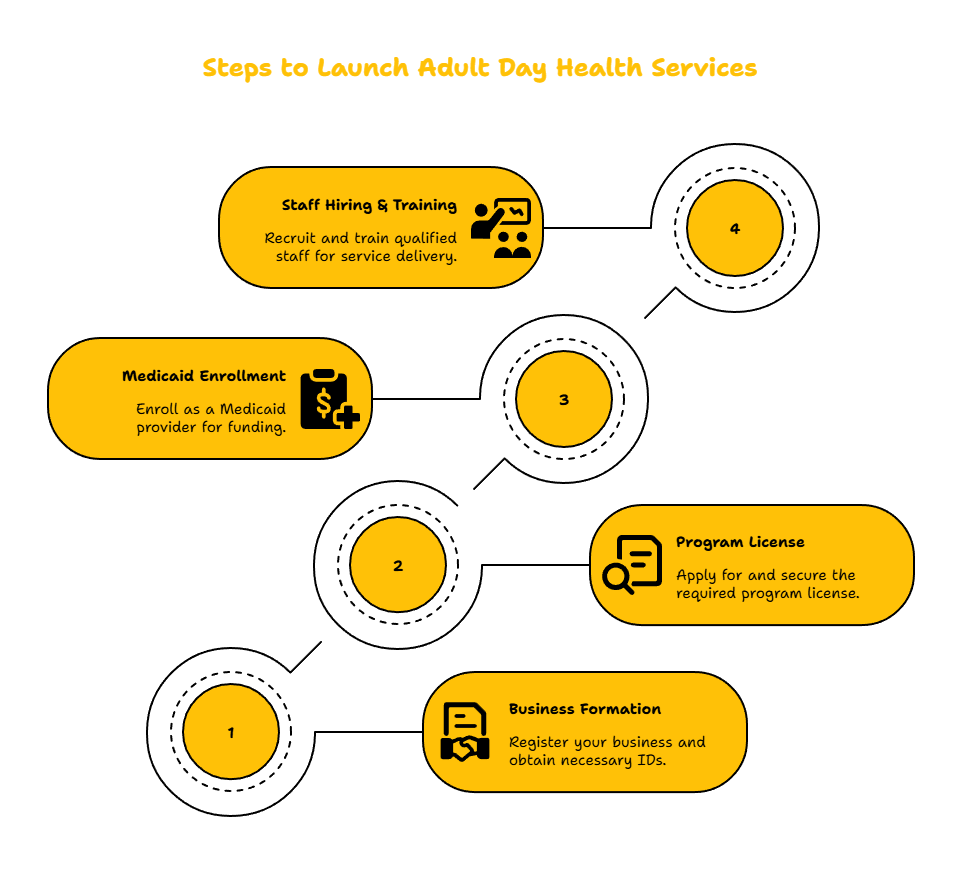
The path to becoming an approved provider is structured into three distinct phases. The first phase focuses on DHS licensure. During this stage, prospective providers must submit an exhaustive program application that details the staffing model, architectural floor plans for the facility, and standardized operational policies. DHS representatives will then conduct an onsite inspection to verify that the physical site and proposed service models meet the safety, nutritional, and medical requirements set by the state.
The second phase involves enrollment through the Arkansas Medicaid Provider Enrollment Portal. Applicants must submit their facility license, verify their NPI, and configure their electronic funds transfer (EFT) information to receive future reimbursements. Once the Medicaid provider number is issued, the final phase focuses on establishing referral pathways. This involves proactive outreach to case managers, local hospitals, and Area Agencies on Aging (AAAs), which are essential for identifying the population of individuals who need Adult Day Health services.
What Are the Staffing and Documentation Standards?
Human capital is the cornerstone of a compliant Adult Day Health program. Regulatory bodies mandate specific qualifications for core personnel to ensure clinical and personal care standards are maintained. The Program Director or Administrator must demonstrate previous experience in managing healthcare or social services programming. Clinical oversight must be provided by an RN or LPN licensed in Arkansas, while direct care workers are required to hold a high school diploma or equivalent, possess relevant CNA or caregiver training, and pass all required background and maltreatment checks.
Comprehensive documentation is essential for audit preparedness and continuity of care. Providers must maintain records for every participant, including:
- Detailed intake assessments and individualized care plans.
- Medication administration records (MAR) and health monitoring logs.
- Records of daily activity participation and attendance.
- Transportation logs for those utilizing agency-provided transport.
- Incident reports and documentation of emergency preparedness drills.
- Client rights acknowledgment forms, consent documents, and grievance logs.
Frequently Asked Questions
Which Medicaid waivers cover Adult Day Health services in Arkansas?
Adult Day Health services are primarily authorized under the ARChoices in Homecare Waiver and the Living Choices Assisted Living Waiver. Additionally, services may be coordinated through the Independent Choices Program for respite needs or State Plan Personal Care where applicable.
What is the typical timeline for launching an Adult Day Health program?
The launch process generally spans several months. Business formation usually takes 1–2 weeks, followed by a 60–90 day window for program licensure and onsite inspections. Medicaid enrollment and billing setup typically require an additional 30–60 days, while the final phase of hiring and training staff takes roughly 30–45 days.
Do I need to maintain specific staff-to-participant ratios?
Yes, all providers must adhere to mandated staff-to-participant ratios to ensure adequate supervision and medical coverage. Specific requirements are dictated by the licensure standards enforced by the Department of Human Services, and these ratios must be clearly defined in your internal policy and procedures manual.
Key Takeaways
Developing an Adult Day Health program in Arkansas requires strict adherence to both clinical regulations and fiscal reporting standards. Success hinges on a well-prepared licensure application, rigorous staffing protocols, and the establishment of strong referral relationships with Area Agencies on Aging and case managers. By prioritizing regulatory compliance and participant-centered care, providers can successfully integrate into the Arkansas HCBS framework.
Last verified: October 2023. Disclaimer: This information is for educational purposes only and does not constitute legal or professional advice. Regulatory requirements are subject to change; always consult with the Arkansas Department of Human Services and the Division of Medical Services for the most current information and official guidance regarding Medicaid provider requirements.