ADULT DAY HEALTH CARE (ADHC) SERVICES PROVIDER IN CALIFORNIA
By Fatumata Kaba · 2025-07-06 · 5 min read
ENHANCING HEALTH, INDEPENDENCE, AND SOCIAL CONNECTIONS FOR ADULTS WITH MEDICAL AND COGNITIVE NEEDS IN A COMMUNITY SETTING
Adult Day Health Care (ADHC) services in California provide an essential, state-regulated medical model of care for individuals managing chronic health conditions, developmental disabilities, or cognitive impairments. These centers operate under the Community-Based Adult Services (CBAS) program, offering a structured environment that integrates skilled nursing, therapeutic interventions, and social engagement to support participants in remaining within their own homes and communities.
What Are the Governing Agencies for California ADHC Providers?
The regulatory landscape for California ADHC providers is multi-layered, involving state and federal oversight to ensure patient safety and program efficacy. The California Department of Aging (CDA) serves as the primary entity responsible for licensing ADHC centers and overseeing the rigorous standards and audits required for the CBAS program. Concurrently, the California Department of Health Care Services (DHCS) governs Medi-Cal enrollment, manages provider reimbursement structures, and establishes participant eligibility criteria.
On the ground, Managed Care Plans—including organizations like LA Care, Health Net, and Anthem—play a critical role by authorizing and coordinating specific CBAS services for their enrolled members. Furthermore, the Centers for Medicare & Medicaid Services (CMS) provides the necessary federal oversight, ensuring that all services remain in compliance with Home and Community-Based Services (HCBS) guidelines, which prioritize individualized, person-centered care models.
What Clinical and Therapeutic Services Are Provided in an ADHC Setting?
ADHC centers are designed as non-residential, structured environments that bridge the gap between home life and institutionalized care. By providing a robust suite of medical and social services, these centers effectively delay institutionalization and provide critical relief to family caregivers. The service model is highly interdisciplinary, ensuring that physical, mental, and social needs are addressed in one location.
Approved providers generally deliver the following core services:
- Skilled nursing care and comprehensive medication management
- Physical, occupational, and speech therapy services
- Social services, case management, and mental health counseling
- Daily personal care and hygiene assistance
- Therapeutic and recreational activity planning
- Nutritional meals and ongoing dietary counseling
- Transportation to and from the center, as authorized by the participant's care plan
How Do Providers Navigate the Licensing and Approval Requirements?
Establishing an ADHC provider agency is a complex undertaking that requires adherence to both facility-based licensing and program-specific certification. Initially, entrepreneurs must register their business with the California Secretary of State and secure an EIN from the IRS along with a Type 2 NPI. The physical facility must then meet strict California Department of Public Health (CDPH) health facility standards, which govern everything from square footage and accessibility to infection control protocols.
Once the facility meets physical requirements, providers must obtain an ADHC license from the CDPH and secure CBAS program certification from the CDA. This is followed by formal enrollment as a Medi-Cal provider through the DHCS PAVE portal. Finally, establishing contracts with regional Managed Care Plans is essential to begin receiving referrals and processing billing for services rendered.
What Is the Sequence of the Provider Enrollment Process?
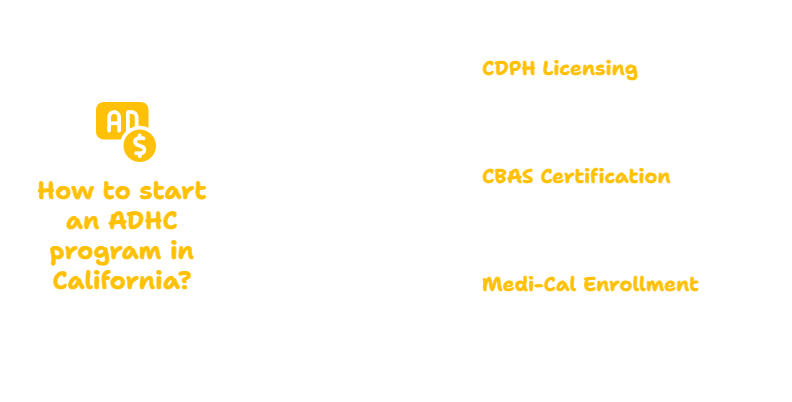
The path to operational status follows a clear, multi-phase trajectory. The process begins with CDPH licensing, where the facility must pass comprehensive inspections related to safety, staffing, and clinical compliance. Once licensed, the provider moves to the CBAS certification phase with the CDA. This involves submitting a formal service delivery model, staffing rosters, detailed care coordination plans, and standardized documentation samples for review.
After successful certification, the provider enters the Medi-Cal enrollment phase via the PAVE portal. This stage requires the submission of all credentials, licenses, and NPI data to the state for final approval. The final step involves formalizing contracts with local Managed Care Plans, which allows the provider to access the network of eligible participants. Each of these steps is sequential and requires meticulous preparation to ensure that documentation reflects the facility’s ability to meet state-mandated ratios and safety requirements.
What Are the Essential Staffing and Operational Requirements?
The efficacy of an ADHC program relies on a robust, multidisciplinary team capable of addressing the complex needs of the participant population. Regulations require a Program Director—typically a licensed professional—to oversee daily operations, alongside a Registered Nurse (RN) and a Social Worker. At least one of the major therapeutic disciplines—physical, occupational, or speech therapy—must be represented on staff, supplemented by Activity Coordinators and support from Certified Nursing Assistants (CNAs).
Beyond professional credentials, all staff members must participate in mandatory training to maintain compliance. This training encompasses:
- Person-centered planning and cultural competency
- Emergency response and standard first aid protocols
- HIPAA, client confidentiality, and privacy standards
- Infection control and systematic documentation practices
- Annual in-service training requirements as mandated by CDPH and CDA
Frequently Asked Questions
What is the expected timeline for launching an ADHC program in California?
The timeline varies based on facility readiness and agency processing times, but generally spans from 6 to 12 months. Business formation is rapid (1–2 weeks), while facility preparation and CDPH licensing typically require 90–150 days, followed by 60–90 days for CDA certification and 45–90 days for Medi-Cal/Managed Care enrollment.
Is transportation a mandatory service for ADHC providers?
Transportation is a critical component of the CBAS program; however, it is provided as part of the service plan only when it is authorized for the specific participant. Providers must be prepared to coordinate these logistics to ensure equitable access to the center for all attendees.
What types of documentation are most scrutinized during audits?
Regulators focus heavily on the participant intake and assessment process, evidence of interdisciplinary team meetings, daily nursing and therapy progress notes, and clear records of visit verification. Maintaining an organized policy and procedure manual that aligns with current CBAS regulations is essential for passing state and local audits.
Key Takeaway: Successfully launching an ADHC provider agency requires a deep understanding of the intersection between clinical care standards and administrative compliance. By focusing on the rigorous requirements of the CDPH, CDA, and DHCS, providers can ensure they are well-positioned to deliver high-quality, sustainable care to California’s most vulnerable populations while maintaining eligibility for Medi-Cal reimbursement.
Last verified: May 2024. This information is provided for educational purposes and does not constitute legal or professional advice. Potential providers should consult directly with the California Department of Aging and the Department of Health Care Services for the most current regulatory updates and specific application requirements.