ADULT COMPANION SERVICES PROVIDER IN MISSOURI
By Fatumata Kaba · 2025-08-07 · 6 min read
Understanding Adult Companion Services in Missouri
Adult Companion Services in Missouri are non-medical support programs designed to provide essential social engagement, supervision, and assistance with daily living activities for individuals with disabilities, chronic illnesses, or age-related challenges. These services play a vital role in preventing social isolation and ensuring the safety of participants, allowing them to remain in their homes and communities rather than transitioning to institutional settings.
As a provider, you are instrumental in delivering care that is strictly non-medical, focusing on the quality of life and the maintenance of a safe, supportive environment for the beneficiary. These services are authorized under Missouri’s Home and Community-Based Services (HCBS) Waivers, meaning all operational standards, staff qualifications, and documentation protocols must align with the regulations set forth by the Missouri Department of Health and Senior Services (DHSS) and the Department of Social Services (DSS).
Navigating the Governing Agencies and Regulatory Landscape
The provision of Adult Companion Services is governed by a tripartite structure of oversight. The Missouri Department of Health and Senior Services (DHSS) serves as the primary agency responsible for the administration of HCBS Waiver programs. DHSS establishes the service definitions, participant eligibility requirements, and the specific standards of care that providers must maintain to stay in compliance with state mandates.
Supporting these efforts, the Missouri Department of Social Services (DSS) manages the fiscal and logistical components of the program. DSS is responsible for provider enrollment, processing claims, and authorizing service delivery within the Medicaid management system. At the federal level, the Centers for Medicare & Medicaid Services (CMS) provides federal oversight to ensure that Missouri’s waiver programs meet national standards for health, safety, and fiscal integrity. Understanding the distinct roles of these three agencies is critical for any agency administrator, as compliance requires adherence to the rules established by all three.
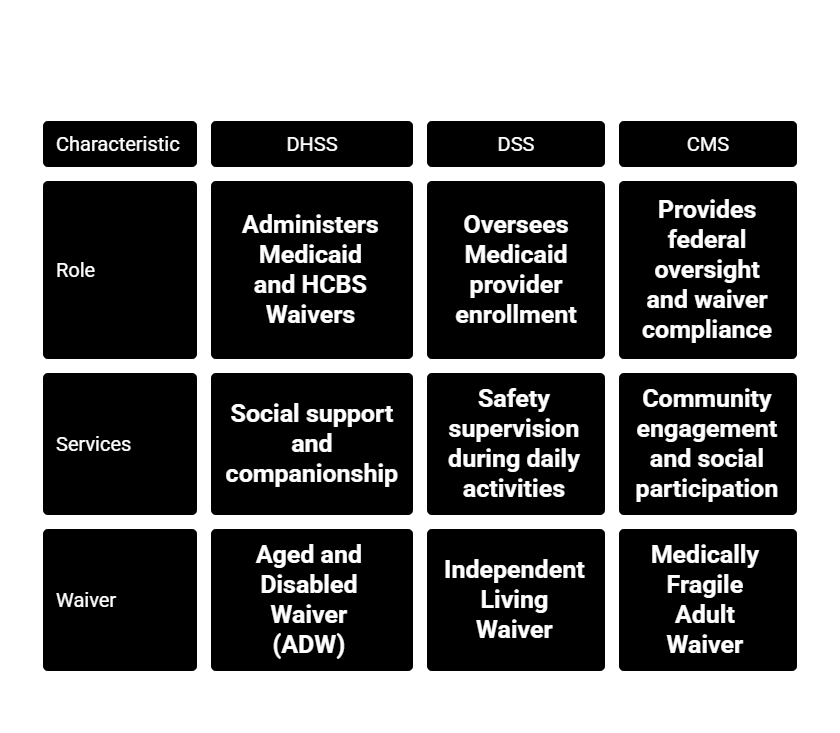
- Missouri Department of Health and Senior Services (DHSS): Administers Medicaid and HCBS Waiver programs and sets clinical and social care standards.
- Missouri Department of Social Services (DSS): Oversees provider enrollment, billing processes, and service authorizations.
- Centers for Medicare & Medicaid Services (CMS): Provides federal oversight and ensures statewide waiver compliance.
Core Components of Adult Companion Services
Adult Companion Services are highly individualized and must be delivered according to the Participant’s Individual Service Plan (ISP) or Person-Centered Plan (PCP). The scope of work is limited to non-medical tasks, which are defined by their intent to support the participant's social and environmental needs. Common services include providing companionship, engaging in recreational activities, and offering supervision to ensure the participant’s safety during periods when family or primary caregivers are unavailable.
Beyond social engagement, providers often assist with light household tasks that directly support the participant's ability to remain independent. This may include meal preparation, light cleaning related to the participant's immediate living area, and accompaniment to medical appointments or community activities. It is essential to ensure that staff do not overstep these boundaries into medical care, as the distinction between companion services and skilled nursing or personal care assistance is strictly regulated under Missouri Medicaid policy.
- Social interaction, conversation, and companionship.
- Accompaniment to medical appointments or community-based social events.
- Assistance with light household tasks and meal preparation.
- Ongoing supervision to maintain the safety and well-being of the participant.
- Facilitation of recreational activities as defined in the ISP or PCP.
Establishing Your Agency: Licensing and Provider Enrollment
Launching an agency to provide Adult Companion Services involves a multi-stage startup process. First, you must formalize your business entity with the Missouri Secretary of State and secure a federal Employer Identification Number (EIN). You will also need a Type 2 National Provider Identifier (NPI) to function as an organizational provider within the Medicaid billing system. Following these initial administrative steps, you must apply for a Companion Care License through the Missouri Department of Health and Senior Services.
The provider enrollment process with the Missouri Department of Social Services follows a logical sequence. After initial registration, you will submit your business documentation, license verification, and evidence of professional liability insurance. The Department of Social Services will review your application to ensure that your agency meets all facility and administrative requirements. Once the application is approved, you will be assigned a Medicaid provider number, which is necessary for billing and service authorization. Providers should be prepared for a 60-90 day timeline for this enrollment phase, as all documentation is subject to thorough review.
Documentation, Staffing, and Operational Standards
Professional accountability is maintained through rigorous documentation. An agency must develop a comprehensive policy and procedure manual that covers client intake, assessment protocols, safety and risk management practices, and ongoing staff supervision. You are required to maintain detailed logs of every visit, ensuring that service delivery aligns with the client’s ISP. Furthermore, staff training must be documented, including evidence of competency in communication, safety procedures, and confidentiality requirements.
Staffing requirements are equally specific. Every agency must designate a Companion Care Program Manager who possesses relevant experience in social services or community support. Direct care staff must meet minimum standards, including high school graduation or the equivalent, valid CPR and First Aid certifications, and a successful background check. Additionally, staff must receive mandatory training on client rights, emergency response, and interpersonal communication to ensure they are prepared to handle the diverse needs of the participants in the ADW, Independent Living, or Medically Fragile Adult waivers.
Frequently Asked Questions
What waivers currently include Adult Companion Services in Missouri?
Adult Companion Services are provided under the Aged and Disabled Waiver (ADW), the Independent Living Waiver, and the Medically Fragile Adult Waiver.
What is the difference between companion services and personal care?
Companion services are strictly non-medical and focus on social engagement, supervision, and basic support. They do not include the "hands-on" medical or high-intensity personal hygiene care typically found in personal care assistant (PCA) programs.
How often must staff be trained?
While specific refresher schedules may vary by policy, providers are required to maintain current certification for CPR/First Aid and ensure that all staff members are trained on client rights, confidentiality, and emergency protocols at the time of hire and on an ongoing basis as needed to ensure safety.
Key Takeaway for Aspiring Providers
Successfully operating as a Missouri Adult Companion Services provider requires a disciplined approach to compliance, documentation, and staff management. By carefully following the requirements set forth by DHSS and DSS, and maintaining a focus on the person-centered care models mandated by CMS, your agency can provide a critical service that helps Missouri’s most vulnerable residents maintain their independence and social connectivity.
WAIVER CONSULTING GROUP'S START-UP ASSISTANCE SERVICE — MISSOURI ADULT COMPANION SERVICES PROVIDER. We support agencies and entrepreneurs in launching compliant Adult Companion Services across Missouri under the HCBS Waiver models. Scope of Work: Business registration and licensing assistance; Medicaid provider enrollment; Policy & procedure manual for companion care operations; Templates for client interaction logs and safety checklists; Website, domain, and email setup; Staff credentialing and training documentation; Client intake packet and service planning forms; Risk management and safety protocols; Referral networking with healthcare providers and community organizations.
Last verified: October 2023. The information provided in this article is for informational purposes only and does not constitute legal or financial advice. Always verify current state regulations directly through the Missouri Department of Health and Senior Services and the Missouri Department of Social Services to ensure compliance with the latest statutes and waiver amendments.