ADULT COMPANION SERVICES PROVIDER IN ALASKA
By Fatumata Kaba · 2025-07-03 · 5 min read
Adult Companion Services in Alaska serve as a critical non-medical support system designed to enhance the quality of life for individuals with disabilities, chronic conditions, or age-related challenges. These services are authorized under Alaska’s Home and Community-Based Services (HCBS) Medicaid Waiver programs, providing essential social engagement, emotional support, and assistance with daily routines to help participants maintain independence within their own homes and local communities.
Operating a provider agency in this sector requires strict adherence to state and federal regulations to ensure participant safety and program integrity. By offering structured, non-medical companionship, providers play a vital role in the long-term support ecosystem, bridging the gap between clinical care and community integration.
How Are Adult Companion Services Governed and Regulated in Alaska?
The delivery of Adult Companion Services in Alaska is subject to rigorous oversight by multiple governmental layers. The primary regulatory body is the Alaska Department of Health – Division of Senior and Disabilities Services (SDS), which is responsible for approving providers, conducting quality monitoring, and ensuring that all service delivery aligns with HCBS waiver guidelines. Providers must maintain constant compliance with SDS standards to remain in good standing.
Beyond the state level, the Alaska Medicaid program manages the administrative aspects of provider enrollment and the reimbursement process for authorized services. At the federal level, the Centers for Medicare & Medicaid Services (CMS) provides the overarching regulatory framework. CMS oversight ensures that Alaska’s HCBS waivers remain compliant with federal mandates, specifically focusing on person-centered service delivery and the protection of participant rights.
What Scope of Care Can Adult Companion Services Providers Deliver?
Adult Companion Services are explicitly non-medical. The objective is to foster emotional well-being and independence rather than providing clinical treatment. Providers must ensure that their services are person-centered and tailored to the specific needs outlined in the participant’s individual support plan. It is important to note that these services cannot duplicate or replace skilled medical care provided by other licensed professionals.
Approved activities that fall under the scope of this service include:
- Providing meaningful companionship and social interaction.
- Assisting with daily routines and engaging in leisure activities.
- Accompanying participants to medical appointments, errands, and community events.
- Performing light housekeeping and meal preparation related to the participant’s direct needs.
- Providing cueing assistance to support cognitive functioning and memory.
- Delivering consistent emotional support to mitigate feelings of isolation.
What Are the Prerequisites for Provider Enrollment?
Before initiating the application process with the Division of Senior and Disabilities Services, prospective providers must complete several foundational business tasks. These prerequisites establish the legitimacy of the agency and ensure it meets the structural requirements for operating within the state of Alaska.
Providers must be registered with the Alaska Division of Corporations, Business and Professional Licensing. Additionally, the agency must secure a federal Employer Identification Number (EIN) from the IRS and a Type 2 National Provider Identifier (NPI). A physical service base or office must be maintained within the state of Alaska. Furthermore, administrators must establish comprehensive internal systems for participant intake, scheduling, documentation, and the creation of robust policies and procedures that cover both daily operations and community integration safety.
What Is the Step-by-Step SDS Provider Enrollment Process?
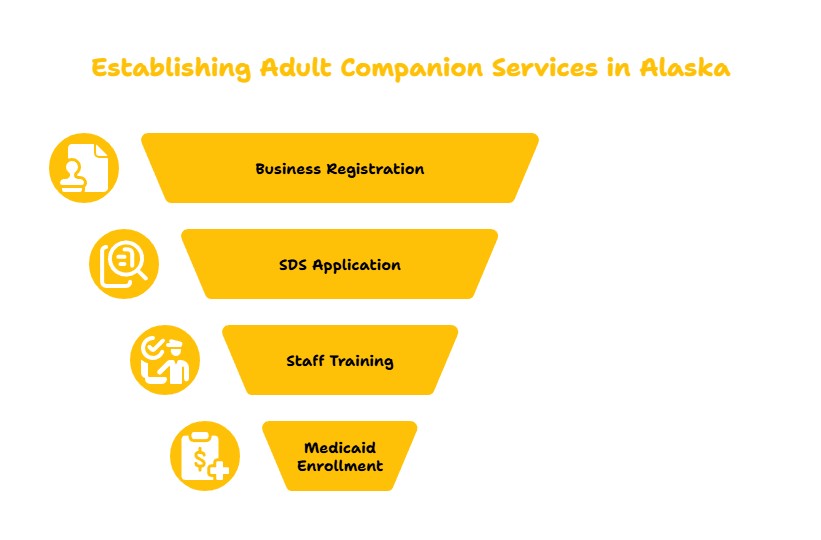
The enrollment timeline is a multi-phase commitment that requires careful planning and administrative rigor. The process begins with requesting an official application packet from the SDS and, ideally, attending a waiver provider orientation session to understand current requirements and expectations. Once the agency is prepared, the formal submission of business documentation, service delivery models, and comprehensive staffing plans is required.
Following the submission of the application, the SDS conducts a Program Readiness Review. During this stage, regulators evaluate the provider’s staff training protocols, internal documentation processes, and participant safety measures. Once the state issues its approval, the provider must finalize their registration with Alaska Medicaid through the Management Information System (MMIS). This final phase involves setting up billing codes and establishing formal agreements for claims processing.
What Documentation Is Required for Ongoing Compliance?
Maintaining a successful provider agency requires the consistent upkeep of detailed records and an active Policy & Procedure Manual. This manual serves as the operational blueprint for the organization and must satisfy all SDS quality assurance standards. Documentation must be organized to allow for ready review by state auditors.
Essential components of your agency’s documentation library must include:
- Verified Business License and Articles of Incorporation.
- Formal NPI and EIN documentation.
- Proof of a physical office address located in Alaska.
- Detailed internal manuals covering client rights, confidentiality, and incident reporting.
- Comprehensive staff files including background checks, training records, and supervision logs.
- Documented systems for participant intake, individualized support planning, and emergency crisis management.
- Clear records of community activity support and billing reconciliation.
Frequently Asked Questions
Which Medicaid waivers currently authorize Adult Companion Services in Alaska?
Adult Companion Services are authorized under several key waivers: the Alaskans Living Independently (ALI) Waiver, the Adults with Physical and Developmental Disabilities (APDD) Waiver, the Individuals with Intellectual and Developmental Disabilities (IDD) Waiver, and the Children with Complex Medical Conditions (CCMC) Waiver, which supports the transition of young adults.
What are the qualification requirements for staff members?
Companion service supervisors should possess experience in case management, human services, or caregiving oversight. Direct support staff or companion workers must hold a high school diploma or GED, pass a mandatory background check, and maintain current CPR and First Aid certification. All staff must also undergo specialized training in person-centered planning, confidentiality, and community socialization techniques.
What is the approximate timeline for launching an agency?
The journey from business formation to active service delivery typically spans several months. Business setup takes approximately 1–2 weeks, while the SDS application and readiness review process often takes 60–90 days. Subsequent staff training requires 30–45 days, and final Medicaid enrollment through the MMIS system typically concludes in 45–60 days.
Key Takeaways for Prospective Providers
Establishing an Adult Companion Services agency in Alaska is a regulated process that demands a commitment to administrative precision and compliance with the Division of Senior and Disabilities Services. From obtaining foundational business credentials to navigating the MMIS enrollment and maintaining rigorous documentation, providers must be prepared to invest in robust operational infrastructure. By prioritizing person-centered care and adhering to the guidelines set forth by the ALI, APDD, IDD, and CCMC waivers, agencies can successfully contribute to the essential social and supportive needs of Alaskans with disabilities.
Last verified: May 2024. This content is for informational purposes only and does not constitute legal or professional advice. Always refer to the latest Alaska Department of Health and CMS guidance for the most current regulatory requirements.