ADULT COMPANION SERVICES PROVIDER IN ALABAMA
By Fatumata Kaba · 2025-06-30 · 5 min read
What Are Adult Companion Services in Alabama?
Adult Companion Services in Alabama represent a vital component of the state’s Home and Community-Based Services (HCBS) framework, specifically tailored for individuals with intellectual and developmental disabilities (IDD). These services are designed to facilitate community inclusion, provide necessary supervision, and offer social interaction for individuals residing in their own homes or family homes. By focusing on non-medical support, the program aims to bolster the safety, emotional well-being, and independence of participants.
Managed under the authority of the Alabama Department of Mental Health (ADMH) and the Alabama Medicaid Agency, these services ensure that participants can maintain their living arrangements while receiving consistent, compassionate care. The service model is fundamentally person-centered, ensuring that activities are non-intrusive and strictly aligned with the unique preferences and support needs documented in an individual’s service plan. Through professional oversight and community-based engagement, Adult Companion Services serve as a bridge that keeps vulnerable populations connected to their communities.
Navigating the Regulatory Oversight of HCBS Waivers
To successfully operate an Adult Companion Services agency, providers must navigate a multi-tiered regulatory structure. At the federal level, the Centers for Medicare & Medicaid Services (CMS) establishes the broad guidelines that states must follow to ensure that HCBS waivers prioritize the rights and safety of participants. These federal standards form the bedrock upon which all state-level policies are built.
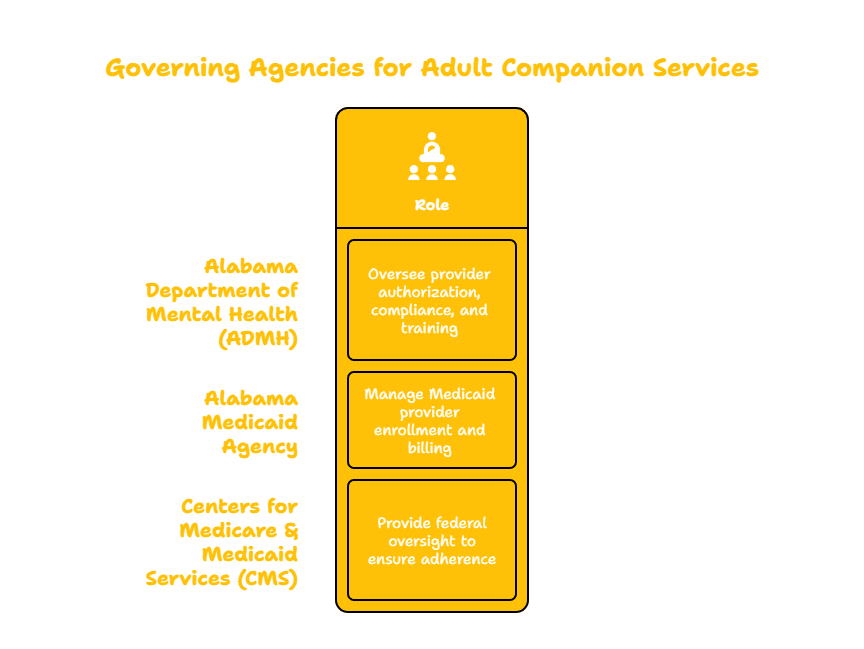
In Alabama, the Alabama Department of Mental Health (ADMH) serves as the primary regulatory body responsible for provider authorization, quality compliance, and ongoing training requirements. Providers must also coordinate with the Alabama Medicaid Agency, which handles the complex tasks of provider enrollment and the processing of claims for services rendered. Adherence to both ADMH administrative codes and Alabama Medicaid requirements is mandatory for maintaining an active status as a waiver service provider.
- Alabama Department of Mental Health (ADMH): Oversees provider authorization, compliance, and training requirements.
- Alabama Medicaid Agency: Manages Medicaid provider enrollment and billing operations.
- Centers for Medicare & Medicaid Services (CMS): Provides federal oversight to ensure adherence to HCBS waiver program guidelines.
Core Operational Requirements for New Providers
Establishing an Adult Companion Services agency requires a rigorous administrative foundation. Before applying for program authorization, a provider must complete the necessary business formation steps, including registration with the Alabama Secretary of State, obtaining an Employer Identification Number (EIN) from the IRS, and securing a Type 2 National Provider Identifier (NPI). This structural setup ensures the business is legally recognized to contract with the state.
Beyond legal formation, prospective providers must demonstrate operational readiness. This includes maintaining a functional office space, whether in a dedicated commercial facility or a structured home-based office. Providers are required to develop comprehensive service delivery procedures that detail how they will manage in-home care and community-based interactions. The ability to implement robust systems for time-tracking, activity logging, and documenting service outcomes is essential for regulatory audit preparation.
The Path to ADMH Provider Enrollment
The enrollment process is a sequential journey that begins with demonstrating administrative competency to the ADMH. After obtaining the Adult Companion Services Provider Application Packet, a potential provider must draft a detailed business and service plan. This plan must articulate how the organization will manage staffing, ensure consumer safety, and conduct daily activity planning. It should also specify how the agency will maintain documentation, including consumer interaction notes and incident reporting protocols.
Following the submission of the application, the provider will undergo a rigorous screening and readiness review. This phase focuses on the vetting of personnel, including mandatory background checks, drug screenings, and the verification of credentials for all direct support staff. The ADMH will evaluate the provider’s policies regarding consumer protection, emergency response, and staff supervision. Upon achieving ADMH certification, the final step involves completing the formal Alabama Medicaid enrollment process to become eligible for billing under the relevant waiver codes.
- Application Submission: Provide a service plan outlining staffing, safety, and documentation procedures.
- Background & Credentialing: Perform background checks and document staff training on ethics and safety.
- Program Readiness Review: Undergo an evaluation of policy manuals, incident report templates, and supervision structures.
- Medicaid Enrollment: Finalize billing authorization and establish the necessary provider codes.
Staffing and Documentation Standards
The quality of care provided under the HCBS waiver system is directly tied to the competency of the staff. The agency must appoint a Program Coordinator, who is responsible for overseeing the quality of services, managing staff, and ensuring that consumer support remains in line with individual service plans. Additionally, companion caregivers must meet specific educational requirements, such as holding a high school diploma or GED, and demonstrate a commitment to professional caregiving standards.
Comprehensive documentation is the most critical aspect of regulatory compliance. Every interaction must be logged according to ADMH requirements, reflecting the time spent, the activities conducted, and the progress made toward the individual’s goals. Providers must maintain a detailed Policy and Procedure Manual covering confidentiality, abuse prevention, and emergency protocols. Because the program is subject to periodic state audits, organized and accurate record-keeping is non-negotiable for continued participation in the waiver programs.
Frequently Asked Questions
What specific waivers authorize Adult Companion Services?
Adult Companion Services are authorized under the ID (Intellectual Disabilities) Waiver, the LAH (Living at Home) Waiver, and the State of Alabama Community Waiver Program.
How long does the provider enrollment process typically take?
The timeline varies, but generally involves a 60-90 day review period for the ADMH application, 30-60 days for program readiness, and another 60-90 days for Medicaid enrollment.
What are the primary responsibilities of a companion caregiver?
Caregivers provide non-medical supervision, emotional support, assistance with light housekeeping and meal preparation, and accompaniment to community events or appointments as dictated by the consumer’s service plan.
Summary of Startup Assistance Services
Waiver Consulting Group provides structured support for providers navigating the Alabama HCBS waiver environment. Our assistance covers the end-to-end process, from initial business formation and legal entity registration to the development of robust Policy and Procedure Manuals. We guide agencies through the creation of internal systems for staff training, clinical documentation, and client admission protocols. Furthermore, we provide operational training to ensure that providers can successfully meet the rigorous quality assurance and compliance standards set by the ADMH and the Alabama Medicaid Agency, positioning new agencies for long-term success in the disability support sector.
Key takeaway: Establishing an Adult Companion Services agency in Alabama requires a meticulous approach to administrative compliance, rigorous adherence to ADMH and Medicaid policy, and a steadfast commitment to person-centered care for individuals with IDD.
Last verified: 2024. This content is provided for informational purposes only and does not constitute legal or professional advice. Requirements for Medicaid provider enrollment and state licensing are subject to change. Consult directly with the Alabama Department of Mental Health and the Alabama Medicaid Agency for the most current regulatory guidance and official application protocols.