ADAPTIVE EQUIPMENT SERVICES PROVIDER IN WYOMING
By Fatumata Kaba · 2026-04-14 · 7 min read
Adaptive Equipment services in Wyoming provide essential tools and assistive technology designed to enhance the safety, mobility, and functional independence of Medicaid waiver participants. By offering customized devices that support daily living, these providers play a critical role in helping individuals remain in their homes and communities, effectively reducing the need for institutionalized care.
For provider agency founders and administrators, establishing a compliant Adaptive Equipment operation requires a strategic focus on clinical necessity, rigorous documentation, and adherence to Wyoming Department of Health (WDH) standards. This guide outlines the operational framework, regulatory requirements, and enrollment pathways necessary to launch and maintain a successful adaptive equipment service business within the state’s Medicaid ecosystem.
What Are the Governing Agencies and Regulatory Roles in Wyoming?
The provision of adaptive equipment is primarily regulated by the Wyoming Department of Health (WDH), which encompasses the Developmental Disabilities Division (DDD) and the Division of Healthcare Financing. These agencies establish the foundational policies, set service limits, and define the criteria for equipment eligibility. Understanding their role is vital for providers, as they dictate the administrative environment in which all reimbursement and service delivery occurs.
Beyond state oversight, Case Management Agencies and Public Health Nursing (PHN) entities act as the primary conduits between the participant and the provider. These professionals are responsible for identifying an individual's specific needs, justifying the medical necessity of equipment, and coordinating the authorization process. Providers must maintain open channels with these entities, as their assessment forms and documentation are the basis upon which all Medicaid claims are approved.
Finally, Medicaid Provider Services oversees the administrative backend, handling provider enrollment, billing operations, and the issuance of reimbursement for equipment purchases. Providers must ensure that their business processes align with the billing guidelines mandated by this division to prevent denials and ensure the sustainability of their services. Accurate enrollment and adherence to state-specific billing codes are mandatory for ongoing operational approval.
What Scope of Adaptive Equipment Does Wyoming Medicaid Cover?
Adaptive equipment encompasses a broad spectrum of specialized tools and devices intended to bridge the gap between an individual's physical limitations and their ability to perform daily tasks. Coverage is determined by whether the equipment is medically necessary, cost-effective, and aligns directly with the participant’s Individualized Plan of Care (IPC) or service plan. The objective is always to promote autonomy and mitigate safety risks within the home environment.
Examples of covered adaptive equipment include:
- Wheelchairs, including manual, powered, and tilt-in-space configurations.
- Personal care aids such as shower chairs, grab bars, and specialized toileting systems.
- Mobility and transfer devices, including hospital beds and mechanical lifts.
- Communication aids, such as sophisticated speech-output systems.
- Environmental control units, including smart switches and specialized interface devices.
- Adaptive daily living tools, such as modified eating utensils and cooking aids.
- Sensory regulation equipment and safety modifications designed to support behavioral needs.
It is important to note that many of these items require a professional evaluation before procurement. Therapists, such as occupational or physical therapists, or assistive technology specialists, must often validate the need for high-complexity items. Providers should be prepared to integrate these clinical recommendations into their documentation to satisfy prior authorization requirements.
How Do Providers Navigate Licensing and Enrollment Requirements?
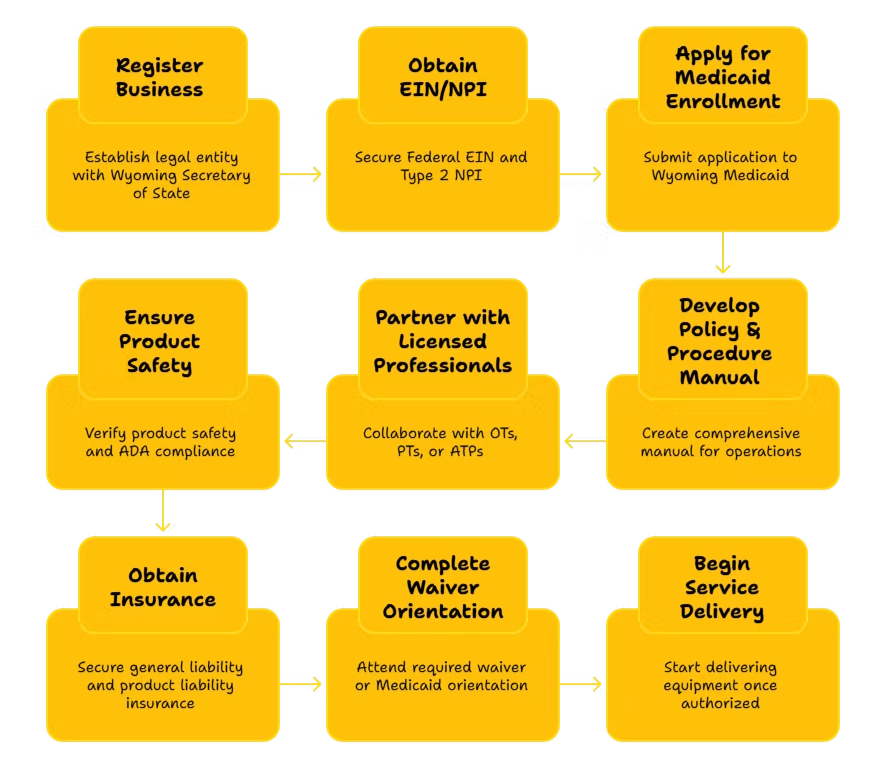
Establishing an adaptive equipment business in Wyoming begins with formalizing the entity under state law. Founders must first register their business with the Wyoming Secretary of State and obtain a Federal Employer Identification Number (EIN) and a Type 2 National Provider Identifier (NPI). These are the foundational legal requirements for any entity interacting with state and federal healthcare billing systems.
Once the business is legally established, the provider must enroll with Wyoming Medicaid as a Durable Medical Equipment (DME) provider or an authorized waiver-based vendor. The enrollment process requires the submission of a comprehensive portfolio, including product catalogs, detailed warranty policies, and a robust Policy & Procedure Manual. This manual serves as the provider's roadmap for compliance, detailing everything from order intake and equipment delivery to the handling of returns and repairs.
Operational readiness also involves ensuring that the provider has established partnerships with licensed clinicians. Because many waivers require assessments by Occupational Therapists (OTs), Physical Therapists (PTs), or Assistive Technology Professionals (ATPs), having a network of credentialed evaluators is essential. Additionally, providers must maintain comprehensive general liability and product liability insurance to safeguard the business against the risks inherent in medical device distribution.
What Are the Essential Staffing and Documentation Protocols?
Effective service delivery depends on a well-trained staff capable of managing both the technical and administrative demands of the business. The Equipment Coordinator or Vendor Representative is the primary point of contact for participants and case managers. This individual must possess a solid understanding of adaptive device standards and be strictly trained in HIPAA compliance, documentation, and the logistical realities of equipment delivery and setup.
For more complex needs, the role of the Licensed Evaluator is critical. These professionals, who must hold current Wyoming state licenses or relevant RESNA certifications for ATPs, are responsible for performing functional assessments. They conduct the heavy lifting of writing justification reports that explain why a specific piece of equipment is the most cost-effective and clinically appropriate choice for the participant. Their collaboration with the vendor ensures that the device matches the user’s physical environment and specific health goals.
Documentation requirements are extensive and serve as the primary evidence during audits. A provider’s records must include:
- Clear intake and ordering documentation that links to the participant’s care plan.
- Signed service logs and training verification for any equipment that requires user instruction.
- Safety, maintenance, and repair records for the duration of the equipment’s lifecycle.
- Up-to-date staff credentials and background check documentation.
- Well-defined participant rights, HIPAA consent forms, and clear, written warranty information.
Which Medicaid Programs Support Adaptive Equipment Services?
Adaptive equipment is funded through several specific Medicaid waiver programs, each designed to meet the unique needs of different populations within Wyoming. The Comprehensive Waiver for individuals with I/DD offers broad support for devices related to mobility, self-care, communication, and behavioral health. Similarly, the Supports Waiver for the I/DD population covers basic equipment needs, though often subject to specific financial or service caps.
For older adults and individuals with physical disabilities, the Community Choices Waiver (CCW) provides a pathway for accessing medically necessary equipment that facilitates aging in place. Beyond the waiver programs, providers should also be aware of the Early and Periodic Screening, Diagnostic and Treatment (EPSDT) benefit. This is a critical resource for children under 21, as it provides a comprehensive avenue for funding medically necessary equipment that may not be covered under other programs.
Finally, the Katie Beckett Program serves as a vital resource for children who are medically fragile and may not meet traditional income-based Medicaid requirements. Because these programs have different criteria and authorization workflows, providers must be fluent in the specific requirements of each program to ensure the right items are ordered for the right participants, avoiding costly delays or claim denials.
Frequently Asked Questions
Does every adaptive equipment order require prior authorization?
Not every item requires prior authorization, but most high-cost or high-complexity equipment does. The necessity and requirement for prior authorization depend on the specific waiver program, the cost of the item, and state-defined thresholds. Providers should always verify current prior authorization requirements with Wyoming Medicaid Provider Services before ordering and delivering equipment.
How long does the provider enrollment process typically take?
The timeline for enrollment can vary, but generally, providers should anticipate a process lasting 1 to 2 months. This includes the time spent submitting documentation to Medicaid, completing the necessary orientation, and waiting for formal approval. It is recommended to have all administrative manuals and business registrations completed prior to beginning the enrollment submission to minimize back-and-forth communication.
What should be included in the equipment delivery and training protocol?
The delivery protocol must ensure that the equipment is not only delivered in working order but is also properly fitted and adjusted for the participant. Training protocols must include hands-on instruction for the participant or their caregiver on the safe use, daily maintenance, and emergency troubleshooting of the device. All training sessions must be documented, signed by the user or their representative, and filed in the participant's record.
Key Takeaway
Success as an Adaptive Equipment provider in Wyoming relies on the integration of meticulous documentation, strong relationships with clinical evaluators, and a deep understanding of state-specific waiver regulations. By focusing on maintaining audit-ready records and ensuring each piece of equipment is backed by clear clinical justification, providers can offer high-quality, compliant support that significantly improves the lives of Wyoming’s most vulnerable residents.
Last verified: October 2023. Disclaimer: This information is for educational purposes only and does not constitute legal or professional medical advice. Requirements for Medicaid programs and provider enrollment are subject to change. Please consult the official Wyoming Department of Health and Medicaid Provider Services websites for the most current policies and regulatory updates.