ADAPTIVE EQUIPMENT SERVICES PROVIDER IN SOUTH CAROLINA
By Fatumata Kaba · 2025-10-13 · 5 min read
Becoming an approved Adaptive Equipment Services provider in South Carolina is a vital step toward enhancing functional independence and safety for individuals navigating physical, cognitive, or developmental challenges. By facilitating the assessment, procurement, and installation of specialized devices, providers act as essential partners in the South Carolina Medicaid Home and Community-Based Services (HCBS) ecosystem, helping participants remain in their homes and communities.
What Are Adaptive Equipment Services and Who Do They Support?
Adaptive equipment services involve the professional identification and provision of tools designed to bridge the gap between a participant’s current functional capacity and their desired level of independence. These services are more than mere product delivery; they encompass the entire lifecycle of a device, from clinical assessment and customized fitting to final installation and participant training.
These services are critical for maintaining the safety and autonomy of individuals enrolled in South Carolina Medicaid waivers. Through the Community Supports Waiver, ID/RD Waiver, and HASCI Waiver, these devices address unique barriers in the home environment, thereby preventing the need for more restrictive, institutionalized care settings. Approved equipment ranges from simple home modifications like grab bars and shower chairs to complex adaptive switches for communication devices.
How Are Adaptive Equipment Services Regulated in South Carolina?
The provision of adaptive equipment is governed by a hierarchical structure of oversight that ensures Medicaid funds are used effectively and that participants receive high-quality, safe, and person-centered care. The South Carolina Department of Health and Human Services (SCDHHS) serves as the primary authority, managing the funding, billing structures, and the broader definition of services under the state’s HCBS waivers.
Day-to-day coordination and provider monitoring are handled by the South Carolina Department of Disabilities and Special Needs (DDSN). Providers must maintain active alignment with these agencies, as well as the federal Centers for Medicare & Medicaid Services (CMS). Compliance with federal person-centered service standards is mandatory, and providers must ensure that every piece of equipment provided is backed by proper clinical justification and documented necessity.
What Are the Prerequisites for Provider Enrollment?
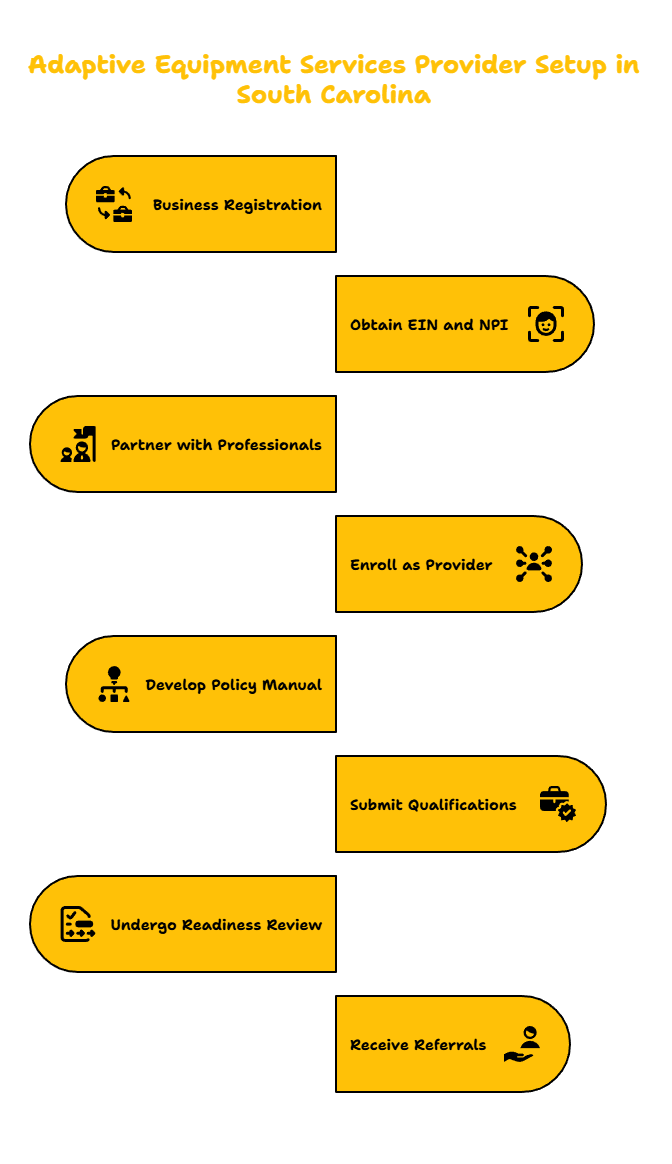
Entering the adaptive equipment market requires a structured business foundation and a commitment to regulatory rigor. Before applying for enrollment, businesses must be formally registered with the South Carolina Secretary of State and possess a valid Employer Identification Number (EIN) and a Type 2 National Provider Identifier (NPI). This foundational data is used to verify the entity’s legal status within the Medicaid system.
Beyond legal registration, prospective providers must prepare a comprehensive Policy & Procedure Manual. This document is a cornerstone of the application process and must detail operational workflows, such as assessment procedures, procurement standards, safety protocols for installation, and strict HIPAA compliance measures. Additionally, providers must secure appropriate product liability and business insurance to protect both the agency and the participants they serve.
What Is the Step-by-Step Enrollment and Implementation Process?
The journey to becoming an authorized provider involves a multi-phase application process that transitions from administrative setup to active service delivery. Once the business entity is established and insurance is in place, the provider must submit formal applications to SCDHHS and/or DDSN, specifically requesting authorization under the Adaptive Equipment category. This application should be accompanied by detailed staff qualifications, workflow samples, and the previously drafted policy manuals.
Following the submission of these materials, the agency will undergo a readiness review. This review evaluates the provider's ability to safely install equipment, maintain accurate clinical documentation, and bill Medicaid appropriately. Once the provider number is issued, the organization moves into the operational phase, where it will begin receiving referrals through service authorizations generated by waiver coordinators.
- Phase 1: Business Formation (EIN, NPI, Secretary of State Registration) – 1–2 months
- Phase 2: Medicaid Enrollment and Credentialing – 2–3 months
- Phase 3: Vendor Sourcing and Staff Training – 1 month
- Phase 4: Service Delivery (Referrals and Authorizations)
What Are the Core Staffing and Documentation Requirements?
Success in this field relies on a team that understands both the technical installation requirements and the clinical needs of the participant. Adaptive Equipment Specialists or installers should possess demonstrated competency in home safety and device installation. In cases where professional clinical judgment is required, the provider must either employ or contract with licensed Occupational Therapists or Physical Therapists to perform assessments and justify the medical necessity of specific equipment.
Documentation is the final line of defense during audits. Providers must maintain rigorous records, including:
- Clinical assessments and corresponding procurement logs
- Installation checklists and participant/caregiver training signatures
- Medicaid billing logs matching the approved service authorizations
- Maintenance logs, warranty tracking, and return protocols
- Mandatory HIPAA and participant rights acknowledgement forms
Frequently Asked Questions
What types of adaptive equipment are typically covered by these waivers?
Coverage generally includes items that promote independence and safety, such as grab bars, non-slip mats, transfer boards, gait belts, specialized positioning systems, and adaptive switches for communication devices. All equipment must be deemed medically necessary for the waiver participant.
Are adaptive equipment services available for children in South Carolina?
Yes, services for individuals under age 21 are supported through programs such as EPSDT and TEFRA, which address the medical necessity of adaptive tools to help children reach developmental milestones and live more independently.
How does a provider ensure ongoing compliance with SCDHHS and DDSN?
Providers ensure compliance by conducting regular internal reviews of their service documentation, ensuring staff complete annual training in infection control and equipment safety, and maintaining an updated Policy & Procedure Manual that reflects current state and federal regulations.
Waiver Consulting Group (WCG) assists providers in navigating the complexities of the South Carolina Medicaid environment. WCG supports agencies in developing Medicaid-compliant adaptive equipment programs through customized Policy & Procedure Manuals, clinical assessment templates, and staff training documentation. By streamlining the enrollment process and standardizing service workflows, WCG helps providers focus on their primary mission: enhancing the lives of individuals with disabilities.
Key takeaway: The path to becoming an approved adaptive equipment provider in South Carolina requires diligent administrative setup, a deep understanding of Medicaid billing regulations, and a commitment to maintaining rigorous, person-centered service documentation.
Last verified: October 2023. Disclaimer: This article is for informational purposes only and does not constitute legal or professional advice. Always refer directly to the latest SCDHHS and DDSN provider manuals and federal CMS guidelines for the most current regulatory requirements.