ADAPTIVE EQUIPMENT SERVICES PROVIDER IN NEW HAMPSHIRE
By Fatumata Kaba · 2025-08-12 · 5 min read
ENHANCING INDEPENDENCE THROUGH CUSTOMIZED EQUIPMENT AND TECHNOLOGY
Adaptive Equipment Services in New Hampshire provide the essential devices and specialized tools required to help individuals with disabilities, chronic conditions, or mobility challenges maintain autonomy within their homes and communities. These services encompass the professional selection, expert installation, and ongoing maintenance of adaptive devices, and they are officially authorized and funded under various New Hampshire Medicaid Home and Community-Based Services (HCBS) Waiver programs.
By integrating customized technology into the participant's living environment, these services directly support the person-centered goals of the Individualized Service Plan (ISP). This guide outlines the regulatory framework, provider requirements, and operational steps necessary for agencies looking to provide these critical supports within the New Hampshire Medicaid landscape.
What Are the Governing Agencies and Regulatory Oversight for Adaptive Equipment Services?
The delivery of Adaptive Equipment Services in New Hampshire is overseen by a structured hierarchy of state and federal agencies to ensure patient safety and fiscal accountability. The New Hampshire Department of Health and Human Services (DHHS) serves as the primary governing body responsible for administering Medicaid waiver funding, managing provider enrollment, and overseeing service authorization and reimbursement protocols.
Within the DHHS, the Bureau of Elderly and Adult Services (BEAS) plays a pivotal role in ensuring that providers adhere to state quality standards, service delivery guidelines, and compliance measures. At the federal level, the Centers for Medicare & Medicaid Services (CMS) provides the overarching regulatory framework. CMS ensures that Medicaid-funded adaptive services align with national standards for person-centered planning, quality of care, and participant protection, ensuring that every piece of equipment provided serves a clear functional necessity for the waiver participant.
What Specific Services Do Adaptive Equipment Providers Deliver?
Adaptive Equipment Services are defined by their focus on enhancing mobility, communication, and daily living skills. Approved providers act as a bridge between clinical recommendations and practical environmental implementation, ensuring that the technology matches the individual's unique physical and cognitive requirements.
Providers are authorized to deliver a comprehensive suite of interventions, which generally include the following core service components:
- Needs Assessment: Evaluating the individual’s functional limitations to recommend evidence-based equipment.
- Device Selection and Procurement: Identifying and securing aids such as wheelchairs, mobility lifts, and communication devices.
- Installation and Setup: Ensuring all equipment is configured properly and meets all safety and accessibility compliance codes.
- User Training: Educating participants and their caregivers on the safe operation, daily use, and basic care of the equipment.
- Maintenance and Repair: Providing technical support to ensure longevity and consistent function of installed devices.
- Home Modifications: Implementing structural supports such as grab bars, ramps, and environmental control units.
How Does a Business Become an Approved New Hampshire Medicaid Provider?
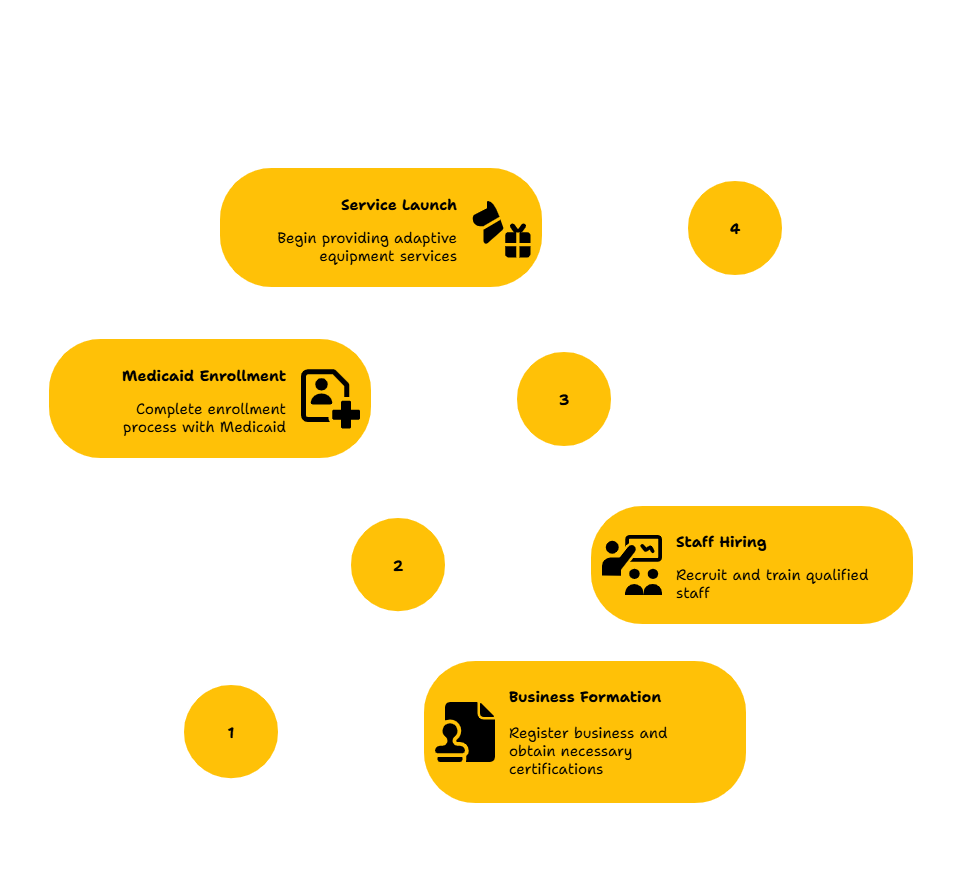
The transition to becoming a Medicaid-approved vendor is a rigorous process that requires administrative readiness and strict adherence to state compliance standards. Prospective providers must first establish a formal business entity and secure all necessary legal identifiers. This includes registering the business with the New Hampshire Secretary of State, obtaining an Employer Identification Number (EIN) from the IRS, and securing a Type 2 National Provider Identifier (NPI).
Once the foundational business structure is in place, the applicant must navigate the enrollment process through the New Hampshire Medicaid Provider Enrollment Portal. This involves submitting detailed documentation, including insurance certificates for both general and professional liability, and demonstrating that the agency has established robust internal policies. These policies must detail how the agency handles equipment assessments, safety installations, and staff training to ensure they meet the specific requirements of the NH DHHS and BEAS.
What Are the Essential Staffing and Credentialing Requirements?
Quality of service is heavily dependent on the technical expertise of the agency’s personnel. The organization must employ qualified staff capable of assessing clinical needs and translating them into technical solutions. A standard organizational structure for an adaptive equipment provider typically includes an Adaptive Equipment Program Director, who holds the responsibility for overall program management and compliance oversight, as well as Adaptive Equipment Specialists and Support Technicians.
To ensure patient safety, all staff members must meet the following criteria:
- Possession of a Bachelor’s degree in rehabilitation technology or related fields, with preference given to Assistive Technology Professional (ATP) certification.
- Successful completion of background checks and health screenings.
- Documented training in HIPAA compliance, client rights, and emergency response.
- Annual competency evaluations and ongoing professional development in the latest adaptive technologies and installation standards.
How Are Adaptive Equipment Services Structured Under Medicaid Waivers?
Adaptive Equipment Services are integrated into several key New Hampshire Medicaid waivers, each designed to support different populations with specific needs. These programs include the Choices for Independence (CFI) Waiver, the Developmental Disabilities (DD) Waiver, the Acquired Brain Disorder (ABD) Waiver, and the In-Home Support (IHS) Waiver for Children. Each waiver requires that the services provided be directly linked to the goals outlined in the participant's Individualized Service Plan.
When providing these services, agencies must maintain meticulous documentation. This includes keeping thorough records of the initial assessment, proof of equipment delivery, user training signatures, and maintenance logs. As providers operate under these waivers, they must ensure that their billing practices align with the specific procedural codes designated for adaptive technology, ensuring audit-readiness and long-term program sustainability.
Frequently Asked Questions
What is the typical timeline for launching an adaptive equipment agency in New Hampshire?
The process generally spans 5 to 9 months. This includes 1–2 months for business formation, 2–3 months for staffing and program development, 60–90 days for Medicaid enrollment and readiness reviews, and 30–45 days for final billing system implementation.
Do staff members need specific professional certifications?
While requirements vary by role, the Program Director should ideally hold an Assistive Technology Professional (ATP) certification. All technical staff must undergo verified training in the specific devices they install and maintain to ensure adherence to safety protocols.
What documentation is critical for Medicaid audits?
Providers must maintain comprehensive files including client assessment reports, signed installation verification forms, training logs, equipment maintenance schedules, and proof of all staff background checks and professional credentials.
Key Takeaway: Successfully launching an Adaptive Equipment Services agency in New Hampshire requires a disciplined approach to both regulatory compliance and technical excellence. By aligning business operations with the specific requirements of the NH DHHS, BEAS, and Medicaid waiver programs, providers can secure their role as essential partners in enhancing the independence of individuals throughout the state.
WAIVER CONSULTING GROUP’S START-UP ASSISTANCE SERVICE — NEW HAMPSHIRE ADAPTIVE EQUIPMENT SERVICES PROVIDER. WCG supports healthcare agencies and adaptive technology providers in launching Medicaid-compliant Adaptive Equipment Services in New Hampshire, offering: Business registration, Medicaid enrollment, and licensing support; Policy manual development for adaptive equipment planning and safety management; Staff credentialing, training program templates, and technical guidance; Medicaid billing setup and audit-prepared financial management; Branding, website development, and client engagement strategies; Quality assurance systems for device safety, user satisfaction, and compliance; Collaboration with healthcare providers and community organizations for referrals.
Last verified: October 2023. Disclaimer: This information is for educational purposes and does not constitute legal or professional advice. Always verify current state regulations and policy manuals through the official New Hampshire Department of Health and Human Services (DHHS) and the New Hampshire Medicaid Provider Enrollment Portal.