ADAPTIVE EQUIPMENT SERVICES PROVIDER IN IOWA
By Fatumata Kaba · 2025-07-22 · 5 min read
Adaptive Equipment Services in Iowa are specialized HCBS waiver provisions designed to provide medically necessary devices and environmental modifications that empower individuals with disabilities to maintain independence in their own homes. By facilitating access to custom seating, mobility aids, and environmental controls, these services bridge the gap between a participant’s functional limitations and their ability to engage meaningfully within their community.
For providers, navigating this landscape requires a deep understanding of the regulatory framework established by the Iowa Department of Health and Human Services (HHS) and the Iowa Medicaid Enterprise (IME). Success as an Adaptive Equipment provider depends on strict adherence to person-centered care standards, accurate clinical documentation, and precise coordination with Iowa’s Managed Care Organizations (MCOs).
Understanding the Governing Structure of Iowa HCBS Adaptive Equipment
The delivery of adaptive equipment in Iowa is overseen by a multi-tiered regulatory structure that ensures services meet the specific needs of HCBS waiver participants. The Iowa Department of Health and Human Services (HHS) and the Iowa Medicaid Enterprise (IME) set the primary standards for provider enrollment, service definitions, and documentation compliance. These agencies ensure that the services provided are non-duplicative of other Medicaid State Plan benefits and remain strictly focused on increasing functional independence.
Managed Care Organizations (MCOs) act as the primary operational point of contact for service providers. In Iowa’s managed Medicaid environment, MCOs are responsible for reviewing and authorizing equipment requests, managing funding approvals, and ensuring that the equipment aligns with the participant’s Individualized Service Plan (ISP). Furthermore, the federal Centers for Medicare & Medicaid Services (CMS) provides overarching guidance, requiring that all adaptive equipment interventions respect the federal mandate for person-centered care and community integration.
Defining the Scope of Covered Adaptive Equipment Services
Adaptive Equipment Services extend beyond simple device procurement. The scope includes a comprehensive lifecycle of care, starting from a professional evaluation to the final installation, customization, and ongoing maintenance of the hardware. To be eligible for reimbursement, equipment must be clearly documented as medically necessary and designed to reduce the participant’s reliance on direct caregiving, thereby enhancing their safety and daily living efficiency.
Approved providers typically deliver a wide array of specialized tools, which may include:
- Custom seating systems, positioning supports, and advanced mobility devices.
- Environmental control units and smart home technology for increased autonomy.
- Lifts, transfer aids, and safety harnesses for fall prevention.
- Adaptive utensils, specialized bathing tools, and dressing aids.
- Specialized beds and pressure relief cushions.
- Assistive communication tools, provided they are not otherwise billed as separate Assistive Technology (AT) services.
Requirements for Provider Licensing and Operational Readiness
Establishing an Adaptive Equipment business in Iowa involves rigorous administrative and compliance prerequisites. Before enrolling with the state, a provider must register their business with the Iowa Secretary of State and obtain both a federal Employer Identification Number (EIN) and a Type 2 National Provider Identifier (NPI). These credentials form the foundation for all subsequent Medicaid billing and documentation activity.
Operational readiness extends to the development of robust internal policies. A provider must demonstrate that they have standardized procedures for conducting participant assessments, coordinating with clinical partners, performing safe installations, and providing necessary user training. Furthermore, maintaining active general liability and product liability insurance is mandatory to protect the provider and the participant during the delivery and installation phases of the service.
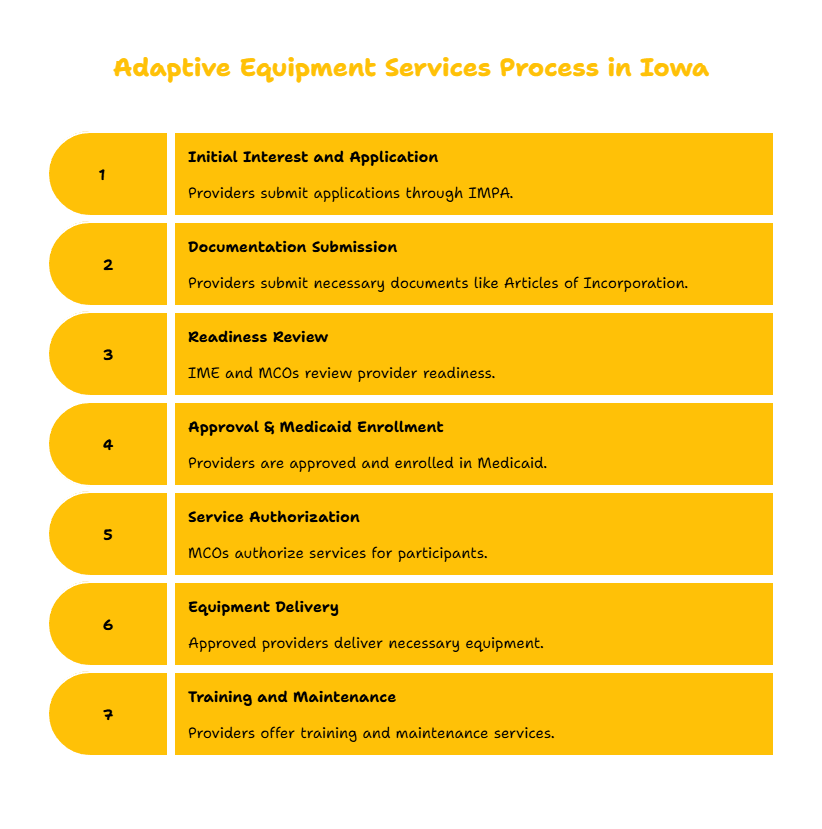
The Iowa Medicaid Enrollment and MCO Coordination Pathway
The provider enrollment process is sequential and requires close attention to detail. Initially, a prospective provider must submit an application through the Iowa Medicaid Provider Portal (IMPA), explicitly designating their intent to serve as an HCBS waiver Adaptive Equipment provider. Following the submission, the provider must engage directly with the specific MCOs managing the participant’s care to satisfy vendor-specific credentialing requirements and align with regional service authorizations.
Documentation is the core component of this phase. Providers should be prepared to submit articles of incorporation, proof of liability insurance, equipment vendor agreements, and a comprehensive policy manual. The state or MCOs may conduct a "readiness review" to ensure the agency possesses the infrastructure necessary to handle equipment inventory and clinical documentation. Once approved, the provider is assigned the necessary billing codes to initiate procurement, installation, and participant training activities.
Staffing, Training, and Clinical Documentation Protocols
Staffing requirements for adaptive equipment providers are structured to ensure that every device is installed with both technical precision and clinical appropriateness. Program coordinators should possess backgrounds in occupational therapy, assistive technology, or related rehabilitation services. When complex positioning or mobility devices are involved, the involvement of a licensed Occupational or Physical Therapist is often required to ensure that recommendations accurately reflect the participant’s physical needs.
All personnel must undergo specific training modules, including:
- ADA equipment handling standards and physical safety protocols.
- HIPAA compliance and the protection of participant confidentiality.
- Emergency preparedness and infection control protocols for in-home service delivery.
- Ongoing device-specific education to keep pace with changing technology.
- Performance evaluations to ensure consistent service quality.
Frequently Asked Questions
What waivers include Adaptive Equipment benefits in Iowa?
Adaptive Equipment is a reimbursable service under several Iowa HCBS waivers, including the Intellectual Disability (ID) Waiver, Brain Injury (BI) Waiver, Health and Disability (HD) Waiver, the Elderly Waiver, and the Children’s Mental Health (CMH) Waiver where applicable.
Can I provide adaptive equipment if I am not a licensed therapist?
While an administrative or technical lead can manage the business, the clinical assessment for adaptive equipment must typically be completed by a qualified professional, such as a licensed Occupational or Physical Therapist, to ensure the device is medically appropriate for the participant's specific functional goals.
What is the role of the Managed Care Organization (MCO) in this process?
The MCOs are responsible for the day-to-day administration of the waiver, which includes reviewing service requests, verifying the medical necessity of the equipment, providing funding authorization, and ensuring that the equipment is documented correctly within the participant’s Individualized Service Plan (ISP).
Key Takeaway
Launching an Adaptive Equipment service in Iowa requires a dual focus: technical expertise in medical hardware and strict adherence to the regulatory requirements of the Iowa HHS and regional MCOs. By maintaining audit-ready documentation, establishing clear staff training protocols, and ensuring seamless coordination with case managers, providers can build sustainable operations that significantly improve the daily lives and autonomy of Iowans with disabilities.
WAIVER CONSULTING GROUP’S START-UP ASSISTANCE SERVICE — IOWA ADAPTIVE EQUIPMENT PROVIDER
WCG supports DME companies, assistive technology vendors, and independent accessibility specialists in launching Medicaid-compliant Adaptive Equipment Services across Iowa.
Scope of Work:
- Business registration, Medicaid enrollment, and MCO credentialing.
- Development of Adaptive Equipment Policy & Procedure Manual.
- Staff credentialing templates, assessment documentation, and delivery logs.
- Medicaid billing system setup and audit-ready documentation.
- Website, domain, and equipment-specific marketing tools.
- Inventory tracking systems, installation forms, and training protocols.
- Quality assurance programs for documentation audits and participant satisfaction.
- Referral development with OTs, waiver case managers, and home modification partners.
Last verified: September 2024. The information provided is for educational purposes and does not constitute legal or financial advice. Please consult with the Iowa Department of Health and Human Services (HHS) or your legal counsel to ensure your organization remains compliant with current state and federal regulations.