ADAPTIVE EQUIPMENT SERVICES PROVIDER IN GEORGIA
By Fatumata Kaba · 2025-07-14 · 5 min read
Improving Mobility and Independence Through Adaptive Equipment Services
Adaptive Equipment Services in Georgia represent a critical component of the state’s Home and Community-Based Services (HCBS) waiver programs. These services provide individuals with disabilities or chronic conditions the specialized devices necessary to enhance functional abilities, ensure safety, and foster independence within their homes and the broader community.
By securing authorization under Georgia’s Medicaid waiver programs, providers bridge the gap between physical limitations and environmental accessibility. The primary objective is to empower participants to achieve greater self-sufficiency through equipment that is medically necessary, expertly fitted, and properly maintained.
Who Governs Adaptive Equipment Services in Georgia?
The delivery of Adaptive Equipment Services is governed by a multi-agency framework designed to ensure participant safety and fiscal accountability. At the federal level, the Centers for Medicare & Medicaid Services (CMS) provides oversight, establishing the standards that states must meet to maintain federal financial participation in HCBS programs.
At the state level, the Georgia Department of Community Health (DCH) manages the administrative aspects of the Medicaid program, including provider enrollment, service authorization, and the reimbursement process. Simultaneously, the Georgia Department of Behavioral Health and Developmental Disabilities (DBHDD) acts as the operational lead for approvals specifically under the New Options Waiver (NOW) and the Comprehensive Supports Waiver Program (COMP).
- Georgia Department of Community Health (DCH): Manages the statewide Medicaid provider enrollment and reimbursement systems.
- Georgia Department of Behavioral Health and Developmental Disabilities (DBHDD): Oversees the approval and clinical oversight for equipment within the NOW and COMP waivers.
- Centers for Medicare & Medicaid Services (CMS): Sets federal standards for compliance and quality assurance in HCBS waiver services.
What Constitutes Core Adaptive Equipment Services?
Adaptive Equipment Services encompass the entire lifecycle of a medical device, from the initial clinical assessment to long-term maintenance. Providers are responsible not only for the acquisition of equipment but for ensuring that each device is customized to the specific physiological and environmental needs of the participant. This comprehensive approach is vital for ensuring the equipment is used correctly and safely.
Service delivery includes performing evaluations to determine functional needs, procuring high-quality devices, customizing settings for individual ergonomics, and providing hands-on training to the participant and their caregivers. Furthermore, providers must offer ongoing support, including maintenance, repairs, and modifications to ensure the device continues to meet the participant's changing requirements over time.
- Evaluation and identification of appropriate adaptive devices.
- Procurement and custom fitting of mobility and accessibility aids.
- Comprehensive training for users and caregivers on operation and safety.
- Maintenance, repair, and modification of equipment over the duration of the waiver authorization.
How to Navigate the Provider Enrollment Process
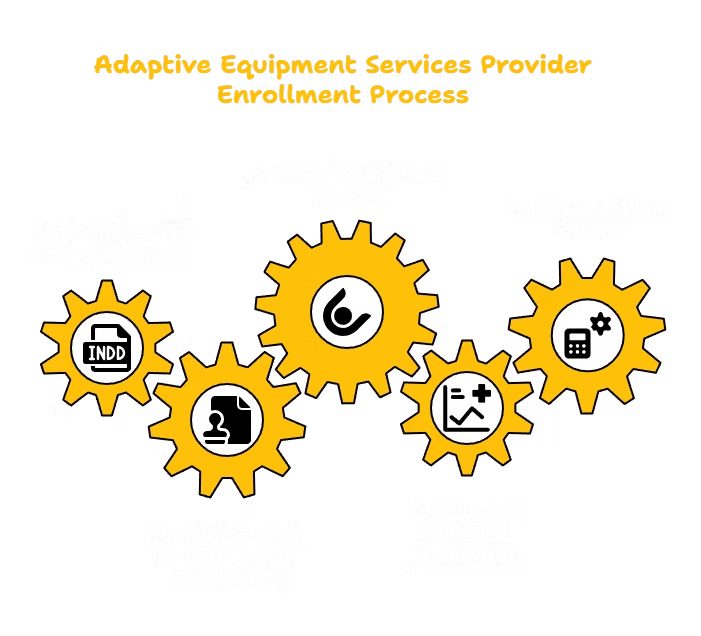
Becoming an approved provider is a structured, multi-phase process that requires rigorous attention to detail. Initially, potential providers must register their business entity with the Georgia Secretary of State and obtain the necessary federal identifiers, including an EIN and a Type 2 NPI. Following these foundational steps, the provider must engage with the DBHDD to submit a formal Letter of Intent and complete the pre-qualification checklist.
Once the initial documentation is submitted, the agency conducts a program readiness review. This review evaluates the provider's operational capacity, including their assessment protocols, staffing plans, and systems for maintaining participant privacy and HIPAA compliance. Upon receiving formal approval from DBHDD, the provider completes their enrollment in the Georgia Medicaid Management Information System (GAMMIS) to gain the ability to bill for services.
- Complete business registration and obtain federal tax and identification numbers (EIN/NPI).
- Submit a Letter of Intent and documentation to the DBHDD for initial review.
- Pass the program readiness assessment focusing on operational and compliance systems.
- Finalize Medicaid enrollment through the GAMMIS portal to activate billing capabilities.
What are the Staffing and Documentation Standards?
Quality of care is inextricably linked to the expertise of the personnel and the robustness of the provider’s internal documentation. Agencies are expected to employ highly qualified individuals, preferably those holding certifications such as the Assistive Technology Professional (ATP) credential. Staff must be trained not only in the technical aspects of equipment fitting but also in the ethical and legal standards of the Medicaid program, including participant rights and emergency response protocols.
Documentation requirements are extensive and serve as the audit trail for every service rendered. Providers must maintain a comprehensive Policy and Procedure Manual that addresses everything from intake and assessment to warranty management and emergency repair logs. Accurate, real-time documentation is essential for ensuring that all equipment provided remains "medically necessary" as defined by the participant's Individual Service Plan (ISP).
Frequently Asked Questions
Is professional certification required for all staff members?
While not every staff member requires a specific certification, key personnel, particularly those involved in equipment assessment and recommendations, should hold recognized credentials such as the Assistive Technology Professional (ATP) certification to ensure clinical accuracy and adherence to industry standards.
What equipment is generally covered by Georgia Medicaid waivers?
Coverage is centered on items that improve independence and safety, including manual and powered wheelchairs, custom seating systems, transfer aids, augmentative communication devices, and environmental control units. All equipment must be linked to a specific need identified in the participant’s Individual Service Plan.
What is the typical timeline for becoming a fully operational provider?
The total duration typically ranges from 140 to 200 days. This includes initial setup (1–2 weeks), the DBHDD application and readiness review (60–90 days), staffing and vendor coordination (30–45 days), and final Medicaid billing system configuration (45–60 days).
Key Takeaway
Launching an Adaptive Equipment Services business in Georgia requires a commitment to both technical expertise and administrative precision. By aligning with the regulatory requirements set forth by DCH and DBHDD and prioritizing the development of rigorous operational policies, providers can successfully deliver the essential equipment that empowers individuals to lead more independent, integrated lives within their communities.
Last verified: [Insert Date]. This document is provided for informational purposes only and does not constitute legal or professional advice. Always refer to the latest Georgia Department of Community Health (DCH) and Department of Behavioral Health and Developmental Disabilities (DBHDD) manuals for the most current regulatory requirements.