ADAPTIVE EQUIPMENT SERVICES PROVIDER IN CALIFORNIA
By Fatumata Kaba · 2025-07-07 · 5 min read
Adaptive Equipment Services in California provide essential access to specialized technology, mobility aids, and assistive devices that empower individuals with intellectual and developmental disabilities (IDD) to live more independently. These services are primarily facilitated through the state’s 21 Regional Centers under the Lanterman Developmental Disabilities Services Act, ensuring that customized equipment—ranging from communication devices to sensory tools—is integrated directly into an individual’s person-centered plan to maximize safety and autonomy.
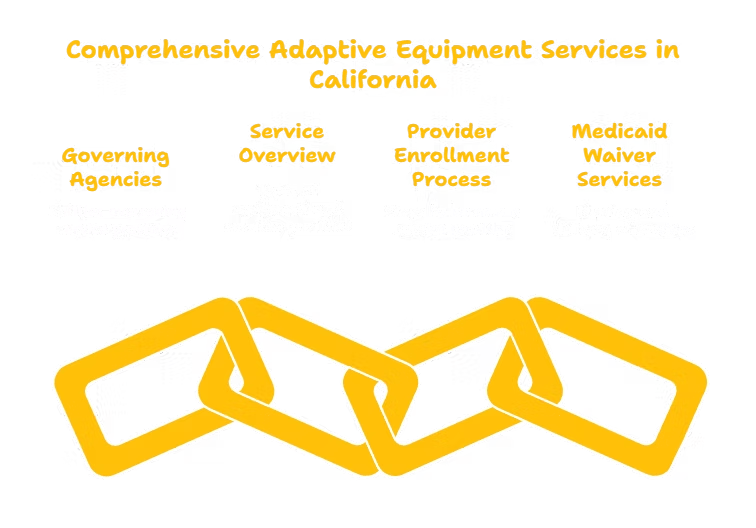
Understanding the Governing Landscape and Regulatory Oversight
The provision of adaptive equipment in California operates within a multi-tiered regulatory framework. At the center is the California Department of Developmental Services (DDS), which establishes the statewide standards and policies for services delivered through the Regional Center system. Each Regional Center acts as a local purchasing agent, responsible for "vendorizing" providers and ensuring that every piece of equipment authorized is strictly aligned with the consumer’s Individual Program Plan (IPP).
In addition to the DDS and Regional Centers, the California Department of Health Care Services (DHCS) manages the Medi-Cal program. While Regional Centers often act as the payer of last resort, they must coordinate with Medi-Cal to ensure that standard Durable Medical Equipment (DME) is sought through clinical insurance channels before utilizing developmental disability funding. Furthermore, for services funded through Home and Community-Based Services (HCBS) Waivers, providers must adhere to federal standards set by the Centers for Medicare & Medicaid Services (CMS) regarding community integration and individual rights.
Defining the Scope of Adaptive Equipment Services
Adaptive Equipment Services are defined by their functional necessity. To qualify for funding, a device must directly address a limitation identified in the participant’s IPP, helping the individual navigate their home or community environment with greater safety. Providers are responsible for the entire lifecycle of the equipment, including sourcing, customization, delivery, and ongoing technical support.
Approved providers generally offer a broad array of assistive technology and physical aids. Effective service delivery requires more than just procurement; it necessitates a commitment to the following operational tasks:
- Providing mobility devices such as walkers, gait trainers, and customized manual wheelchairs.
- Supplying augmentative and alternative communication (AAC) devices and talking boards.
- Installing sensory tools, specialized positioning equipment, and bathroom safety modifications like shower chairs and toileting aids.
- Delivering comprehensive in-home setup, user training for the participant and their caregivers, and ongoing maintenance or minor repairs.
- Maintaining rigorous documentation that confirms the delivery of the equipment, the successful training of the user, and the overall effectiveness of the intervention.
Navigating the Provider Vendorization Process
To become a recognized Adaptive Equipment provider in California, an entity must complete the Regional Center vendorization process. This begins with standard business formation steps, including registering the organization with the California Secretary of State and obtaining both an IRS Employer Identification Number (EIN) and a Type 2 National Provider Identifier (NPI). These identifiers are essential for tracking service authorization and billing within the state’s electronic systems.
Once the business is legally established, the prospective provider must contact a local Regional Center to request a vendor application packet for the relevant service code (typically Service Code 125 or 130). The application requires a comprehensive Program Design that outlines the provider's scope of work, ordering protocols, and internal training methodologies. Following the submission of the application, insurance certificates, and documentation of business credentials, the provider may be subject to a vendor orientation or a facility site visit before final approval is granted by the DDS and the Regional Center.
Establishing Operational Documentation and Staffing Standards
Operational success relies on a robust administrative structure. Providers are required to maintain a detailed policy and procedure manual that covers every aspect of the equipment lifecycle, from the initial intake and assessment to the final delivery verification. HIPAA compliance is a mandatory component of this documentation, as providers will frequently handle sensitive medical and personal information regarding the individuals they serve.
Staffing must be handled with equal rigor to ensure both quality of service and safety. Essential roles and requirements include:
- Equipment Specialist/Technician: Personnel must possess demonstrated experience in adaptive equipment, DME, or rehabilitation technology, along with the ability to perform proper installations and conduct effective user education.
- Program Coordinator/Intake Manager: This role is responsible for managing incoming referrals, ensuring timely service delivery, and maintaining clear communication with Regional Center Service Coordinators.
- Mandatory Staff Training: All personnel must undergo training in HIPAA confidentiality, equipment safety standards, infection control protocols for reused devices, and customer service focused on cultural sensitivity and disability awareness.
Frequently Asked Questions
What is the difference between Regional Center funding and Medi-Cal DME?
Medi-Cal generally covers standard, medically necessary durable medical equipment through insurance channels. Regional Centers fund adaptive equipment that is specifically tied to an individual's developmental disability-related goals in their IPP and serves as the payer of last resort if other sources, like Medi-Cal or private insurance, are unavailable.
How long does it take to become a vendor for adaptive equipment?
The timeline varies by region, but the process typically involves 1–2 weeks for business formation, 30–60 days for Regional Center vendorization, and an additional 2–4 weeks for staff training and referral activation before a provider can begin active service delivery.
Are providers required to perform equipment repairs?
Yes, providers are responsible for the ongoing functionality of the equipment they supply. This includes initial setup, training, and performing minor repairs or maintenance to ensure the device remains safe and effective for the participant throughout its use.
Key Takeaways for Prospective Providers
Launching an Adaptive Equipment Service in California requires a clear focus on regulatory compliance, thorough documentation, and strong coordination with Regional Center staff. By ensuring that all equipment is tied directly to the IPP and that staff are adequately trained in safety and HIPAA protocols, providers can effectively bridge the gap between medical necessity and functional independence for individuals with developmental disabilities. Success is built upon the foundational steps of business registration, NPI acquisition, and the development of a high-quality Program Design that meets DDS requirements.
Last verified: October 2023. This information is for educational purposes and does not constitute legal or professional advice. Requirements and procedures for Regional Center vendorization may change; please consult directly with your local Regional Center or the Department of Developmental Services for the most current information and application requirements.