ADAPTIVE AIDS AND EQUIPMENT SERVICES PROVIDER IN MINNESOTA
By Fatumata Kaba · 2025-07-27 · 5 min read
ENHANCING INDEPENDENCE THROUGH PERSONALIZED ADAPTIVE DEVICES AND SUPPORTIVE EQUIPMENT
Adaptive Aids and Equipment Services in Minnesota play a vital role in the state's Medicaid Home and Community-Based Services (HCBS) framework by providing essential tools that increase autonomy, mobility, and communication for individuals with disabilities. For healthcare entrepreneurs and agency administrators, becoming an approved provider involves navigating a rigorous regulatory landscape governed by state and federal entities to ensure that assistive technology is safely and effectively integrated into the lives of waiver participants.
Understanding the Governance and Regulatory Landscape
The delivery of adaptive aids and equipment in Minnesota is overseen by a structured hierarchy of regulatory agencies. At the federal level, the Centers for Medicare & Medicaid Services (CMS) provides oversight to ensure that state programs remain compliant with federal waiver requirements. This ensures a baseline of quality and accessibility across all Medicaid-funded services.
At the state level, the Minnesota Department of Human Services (DHS) serves as the primary administrator for Medicaid and HCBS Waiver programs. The DHS sets the operational standards, funding mechanisms, and provider enrollment criteria. Simultaneously, the Minnesota Department of Health (MDH) manages the regulatory environment for suppliers, ensuring that all equipment meets stringent health and safety standards. Understanding the distinct roles of these three entities is the first step for any agency looking to enter this sector successfully.
- Minnesota Department of Human Services (DHS): Administers Medicaid and HCBS Waiver programs, including funding for adaptive aids and equipment.
- Minnesota Department of Health (MDH): Regulates suppliers and ensures compliance with state health and safety standards.
- Centers for Medicare & Medicaid Services (CMS): Provides federal oversight and ensures waiver compliance.
Defining the Scope of Adaptive Aids and Equipment Services
Adaptive Aids and Equipment Services are not one-size-fits-all; they are specifically tailored to the unique requirements outlined in a participant's Person-Centered Plan (PCP) or Individual Service Plan (ISP). These services are intended to bridge the gap between a participant's physical or cognitive limitations and their daily environmental needs. By providing customized tools, agencies help participants maintain their health and independence within their own homes and communities.
Providers are expected to offer a comprehensive range of support, extending beyond simple product delivery to include professional setup, customization, and user training. The service scope often includes mobility aids, speech-generating communication devices, sensory support tools, and advanced environmental controls. Because these items are vital for daily safety, providers must demonstrate that each piece of equipment is appropriate for the individual and properly maintained over time.
- Mobility aids (e.g., canes, crutches, walkers)
- Communication devices (e.g., speech-generating devices)
- Sensory support tools (e.g., visual aids, hearing aids)
- Environmental controls (e.g., smart home adaptations)
- Personal assistance devices (e.g., adaptive utensils, grooming tools)
- Training on the proper use and maintenance of devices
Navigating the Medicaid Provider Enrollment Process
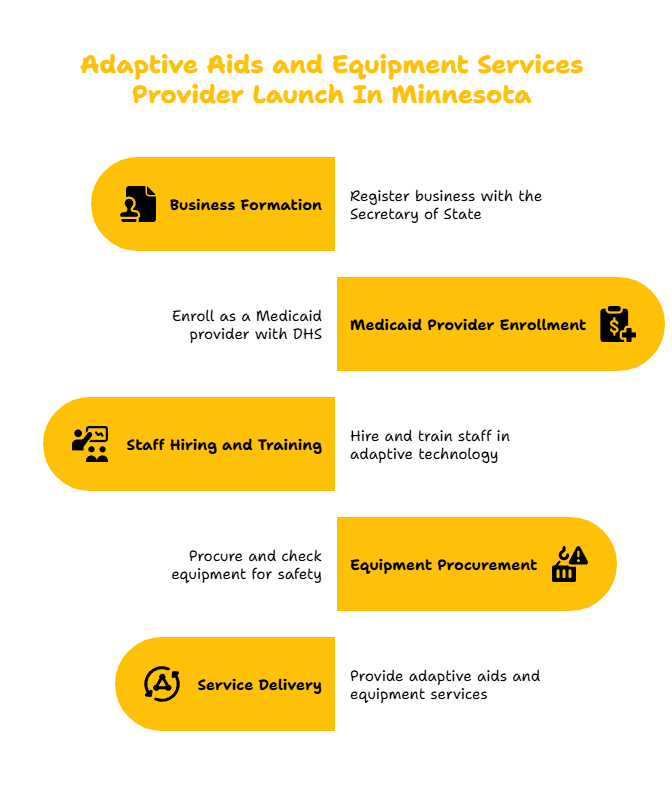
Becoming a Medicaid provider in Minnesota is a multi-step journey that requires meticulous attention to administrative detail. Before initiating the application, agencies must establish their business infrastructure, including registration with the Minnesota Secretary of State, obtaining an IRS Employer Identification Number (EIN), and securing a Type 2 National Provider Identifier (NPI). This foundational work ensures that the business entity is recognized and capable of billing for services.
The enrollment process typically involves a pre-application contact with the DHS to clarify specific program requirements. Following this, the agency must submit formal documentation, including their DME supplier license (if applicable), proof of liability insurance, and detailed service descriptions. The final phase involves compliance verification, where the state ensures the provider’s business model and equipment offerings meet the necessary health and safety standards before the issuance of a Medicaid provider number.
Essential Staffing and Operational Requirements
A compliant agency must maintain a professional team capable of not only sourcing and installing equipment but also providing technical support to the end-user. The Adaptive Equipment Coordinator acts as the central point of contact for service delivery, often requiring a background in rehabilitation technology or similar fields. This role ensures that equipment selections align with the clinical needs identified in the participant's plan.
Installation and maintenance staff must possess technical training to ensure all devices are set up according to the manufacturer’s specifications. Safety is paramount; therefore, all staff must be trained in safe handling, ongoing maintenance protocols, and the specific documentation required by the DHS. Training should also emphasize client-facing communication, ensuring that the participant and their caregivers feel confident and safe while using the newly installed technology.
- Adaptive Equipment Coordinator: Experience in rehabilitation technology or assistive devices.
- Equipment Technician / Installer: Technical training in equipment setup and maintenance, background check, and relevant certifications.
- Ongoing Training: Safe handling, client instruction, maintenance and repair protocols, and record-keeping procedures.
Integrating Services into Minnesota HCBS Waivers
Adaptive Aids and Equipment are facilitated through specific Minnesota waiver programs, including the 1915(c) HCBS Waiver for the Elderly and Disabled, the Community Access for Disability Inclusion (CADI) Waiver, and the Brain Injury (BI) Waiver. Each waiver has specific eligibility criteria, but all share the common goal of preventing institutionalization by supporting the individual in their preferred living environment.
When providing these services, agencies must remain integrated with the participant's care team. This means the adaptive equipment services must reflect the goals established in the participant's care plan. Providers are encouraged to maintain active networking with healthcare professionals and assistive technology specialists to ensure that the solutions provided are current, effective, and strictly compliant with the specific requirements of the underlying waiver program.
Frequently Asked Questions
What documents are essential for the Medicaid provider enrollment application?
Key documents include the Articles of Incorporation, IRS EIN letter, NPI confirmation, a DME Supplier License (if applicable), and current liability insurance certificates. Agencies must also have a comprehensive policy and procedure manual that covers client intake, procurement, safety checks, maintenance records, and staff training.
How long does the provider enrollment process typically take?
The business formation stage generally takes 1–2 weeks, followed by a Medicaid provider enrollment period that spans 60–90 days. Staff hiring and training processes usually require 30–45 days, while equipment procurement and safety verification take approximately 2–4 weeks.
What are the primary responsibilities of an Adaptive Equipment Coordinator?
The Coordinator oversees the lifecycle of service delivery, from performing client needs assessments to ensuring equipment is properly procured and customized. They are responsible for maintaining accurate maintenance records and ensuring all staff have the necessary training to install devices safely and instruct clients on their correct usage.
Key Takeaway
Launching an Adaptive Aids and Equipment Services agency in Minnesota requires a strategic commitment to compliance, rigorous documentation, and a focus on person-centered outcomes. By aligning agency operations with the specific requirements of the DHS and the individual needs of waiver participants, providers can successfully foster independence and contribute to a safer home environment for Minnesotans with disabilities.
Last verified: October 2023. This information is intended for educational purposes and should not be considered legal or financial advice. Regulations for Medicaid HCBS programs are subject to change. Please consult with the Minnesota Department of Human Services or qualified legal counsel to ensure your agency meets all current state and federal compliance requirements.